
Overview
Ticks have stopped being a “cottage country” problem in Ontario. Public Health Ontario confirmed a record 3,614 Lyme disease cases in 2025 — up 19% from 2024 and roughly 30 times the 119 cases recorded in 2010 — and the blacklegged ticks that carry Lyme are now established across the GTA, York, Halton, and Simcoe County. Ticks do not fly or jump; they wait on grass tips and low brush at yard edges and latch onto whatever brushes past — a dog, a child, you. That means the highest-risk zone is often the boundary of your own property: the shaded fence line, the leaf litter under trees, the long grass where lawn meets woods or a ravine. It is exactly the part of the yard people stop maintaining, and exactly where ticks thrive. Reducing ticks where your family actually spends time is the most controllable part of the risk, and our residential pest control tick program targets those edges directly.
Identification
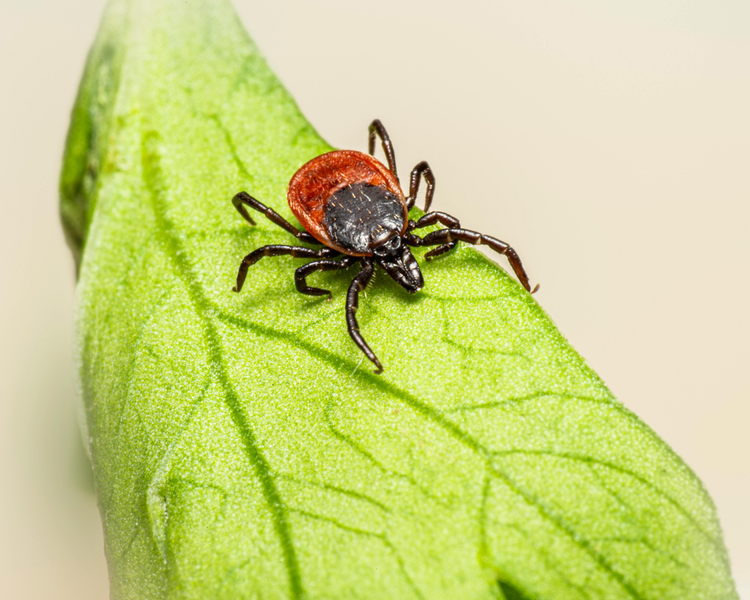
The two ticks Ontario homeowners encounter most are the blacklegged (deer) tick and the American dog tick, and telling them apart tells you your Lyme risk. Blacklegged ticks are small — nymphs 1–2 mm, adults 3–5 mm — with a reddish-brown body, black legs, and a dark shield behind the head; females show a reddish-brown abdomen. American dog ticks are noticeably larger with distinctive white or silver mottled markings on the back. The lone star tick has also been expanding northward into southern Ontario.
| Feature | Blacklegged (Deer) Tick | American Dog Tick |
|---|---|---|
| Adult size | 3–5 mm (sesame-seed) | Larger, more noticeable |
| Markings | Reddish-brown body, black legs | White/silver mottling on back |
| Carries Lyme? | Yes — the only Ontario vector | No |
| Peak activity | Nymphs May–June; adults spring & fall | Spring and early summer |
When in doubt, remove the tick, seal it in a bag, and upload a photo to Public Health Ontario’s eTick service for free species identification.
Life Cycle
The blacklegged tick has a two-year, three-host life cycle: larva, nymph, and adult, each stage taking a single blood meal. Larvae feed on white-footed mice and other small mammals — the main reservoir for the Lyme bacterium — in late summer, overwinter, and emerge the following spring as hungry nymphs. That is why nymph density in late May and June is typically higher than adult density in fall. Adults feed and mate on larger hosts, especially deer, which carry them into new territory. Warming winters that let more ticks survive, plus expanding deer populations, drive the steady northward spread across Ontario each year.
Habitat & Behaviour
Ticks “quest” by climbing to the tips of grass blades and low vegetation with their front legs outstretched, waiting to grab a passing host — they cannot fly, jump, or drop from trees. They need humidity to survive, so they concentrate in shaded, leaf-littered transition zones: the edge where a manicured lawn meets woods, brush, tall grass, or a fence line. Dry, sunny, mown turf is inhospitable to them, which is why a well-maintained lawn and a dry buffer strip are such effective controls. Properties bordering greenbelts, ravines, woodlots, and conservation lands face the heaviest pressure — for example, Pickering yards backing onto Rouge National Urban Park, where the tick population is endemic.
Diet
Ticks feed exclusively on blood, and each life stage takes one prolonged meal lasting several days. Nymphs and adults inject a numbing agent as they feed, so a bite is usually painless and can go unnoticed for days — which is precisely what makes the 36-to-48-hour transmission window dangerous. The tick’s hosts are its whole story: mice and chipmunks feed the larvae and pass along Lyme, while deer feed the adults and carry them into new yards.
Signs of Infestation
- Ticks found on people or pets after time in the yard, on trails, or in the park — the clearest sign, especially along the wooded edge.
- A property bordering woods, ravine, or long grass, which is itself a risk indicator whether or not you have spotted a tick.
- Deer, mice, and chipmunk activity near the home — the hosts that seed and sustain a tick population.
- Pets that range along the fence line returning with ticks, a common way they reach the house.
Damage Caused
Ticks cause no structural or property damage. The harm is medical, and it is significant: Lyme disease and, less commonly, other tick-borne illnesses such as anaplasmosis and the rare but severe Powassan virus. The “damage” of a tick problem is measured in doctor visits, courses of antibiotics, and the anxiety of not being able to let children and pets use the backyard freely. That is why prevention is framed as basic yard safety, not an optional upgrade.
Health Risks
Lyme disease is the central risk. Early symptoms typically appear 3 to 30 days after a bite: the classic expanding bull’s-eye rash (erythema migrans), though not every case produces it, plus fever, fatigue, headache, and joint pain. Left untreated, Lyme can progress to affect the nervous system, heart, and joints; caught early, it responds well to antibiotics.
If you find an attached tick, remove it correctly:
- Use fine-tipped tweezers and grasp the tick as close to the skin as possible.
- Pull straight up with steady, even pressure — do not twist or jerk, which can break off mouthparts.
- Do not apply heat, petroleum jelly, or alcohol to a live tick; these old myths can make it regurgitate into the wound.
- Clean the bite with rubbing alcohol or soap and water.
- Save the tick in a sealed bag, photograph it, and note the date. If it was attached more than 24–36 hours, see your doctor — a preventive dose of doxycycline within 72 hours of a bite significantly lowers Lyme risk.
Seasonal Activity in Ontario
Ticks become active at temperatures as low as 4°C — far cooler than most people expect — so the season stretches from early spring through late fall. Blacklegged ticks have two peaks: the spring nymph season (May–June), widely considered the most dangerous because the poppy-seed-sized nymphs are so easy to miss, and the fall adult season (September–October). Ontario’s warm, wet springs in recent years have pushed tick emergence earlier than historical averages, which is why public health units now advise starting precautions in May rather than midsummer. Tick pressure is expanding north through Simcoe County into Barrie, Innisfil, Bradford, and Newmarket.
Where They Hide
On the property, ticks concentrate in the shaded, humid micro-habitats along borders: the lawn-to-woods edge, leaf litter under trees and along fence lines, tall grass, ground cover, garden beds, stone walls, and around sheds and woodpiles. Woodpiles and ground-level bird feeders attract the mice and chipmunks that host tick larvae, extending the risk toward the foundation. The centre of a short, sunny lawn is comparatively safe — the danger is at the edges.
How They Enter Homes
Ticks do not establish indoor infestations the way fleas or bed bugs do. They arrive as hitchhikers on people, on pets that patrol the wooded edge, and on the wildlife — deer, mice, birds — that move freely through suburban neighbourhoods. A dog that brushes the fence line can carry a tick indoors within the hour, which is why post-outing checks on both pets and people are the frontline habit.
Prevention Tips
- Mow regularly and keep grass short, especially along the edges where lawn meets shrubs, gardens, or natural borders.
- Clear leaf litter, brush, and tall weeds from property borders and under decks — this removes the humid shelter ticks need.
- Create a dry barrier of wood chips or gravel, at least a metre wide, between lawn and any wooded edge or brush pile.
- Move play sets, patios, and seating to the sunny centre of the yard, away from shaded edges.
- Discourage host wildlife — stack firewood off the ground and away from the house, and keep bird feeders away from play areas.
- Treat pets monthly with a vet-recommended tick preventive, and check them after every outing.
- Do a full-body tick check and shower within two hours of coming indoors — scalp, behind ears, armpits, groin, and behind knees.
DIY vs. Professional Treatment
DIY yard work reduces tick habitat — mowing, clearing leaf litter, and building a buffer all help — but it does not clear the ticks already living in the shaded edges, which are hard to reach and maintain. A professional barrier treatment applies a residual product directly to those high-risk zones, killing ticks already present; in Ontario, effective permethrin yard concentrates are restricted to licensed operators under Health Canada’s PMRA rules, so hiring a properly licensed applicator matters. Treatment is typically applied every four to six weeks through peak season and paired with habitat modification for best results.
For a busy household, the real question is whether your weekend is the best tool for the job. Sani IQ treats the shaded edges most homeowners cannot reach and stands behind the result with our Pest-Free-Or-It’s-Free guarantee. See the 2026 tick control cost guide for ranges, the nymph-peak alert and record Lyme cases for the season context, or book a yard assessment through our contact page and plans and pricing.
References
- Public Health Ontario — Lyme Disease
- Government of Canada — Lyme disease: Monitoring
- eTick — tick identification and submission
Last updated: July 16, 2026 · Reviewed by Sani IQ licensed technicians