
Overview
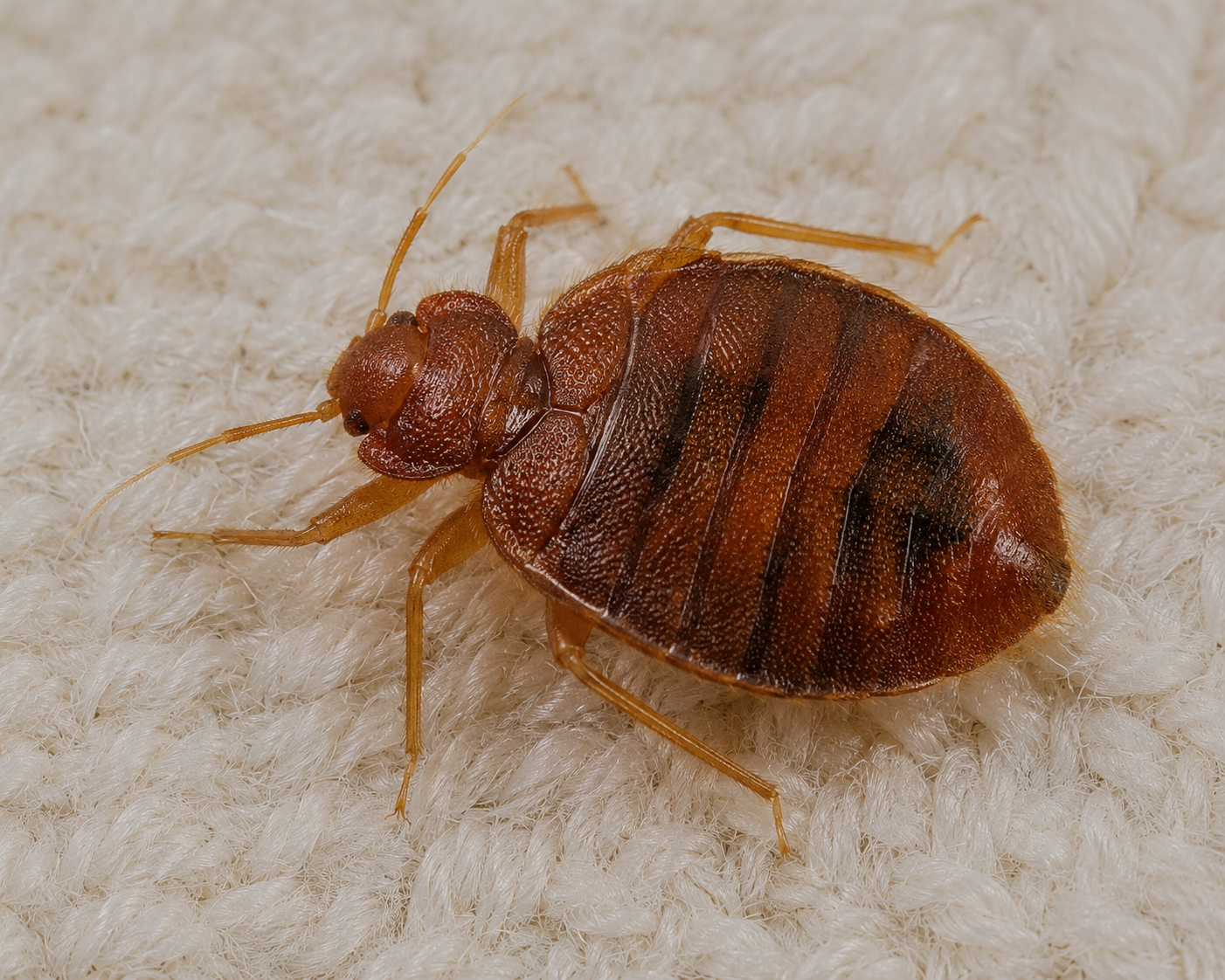
Bed bugs (Cimex lectularius) are small, flat, reddish-brown insects that feed on human blood at night and hide in the seams and cracks nearest where you sleep. They are Ontario’s most stubborn indoor pest — and its most stigmatized, unfairly so, because they have nothing to do with how clean a home is. Toronto has ranked Canada’s worst city for bed bugs for seven straight years in Orkin Canada’s annual list, and seven of the country’s top 10 cities are in Ontario. Homeowners meet them after travel, after buying second-hand furniture, or when they spread between units in a condo or apartment. A single found bug is never a “maybe” problem — bed bugs feed, hide, and lay eggs, so it is always an active one. Our bed bug control service exists because this is a pest that rarely resolves on its own.
Identification
Adult bed bugs are 4–7 mm long, roughly the size and colour of an apple seed — a flat, broad oval that swells and turns a rustier red after a blood meal. They have six legs and two short antennae, cannot fly or jump, and crawl slowly. That low, deliberate movement is itself a clue, because most insects this size move much faster. Newly hatched nymphs are 1.5 mm and nearly translucent, showing a dark red dot inside after feeding; eggs are 1 mm, pearl-white, and glued in tight clusters into seams and screw holes. For the full stage-by-stage breakdown, see our guide on whether bed bugs are visible to the naked eye.
The insects most often mistaken for bed bugs in Ontario homes are cockroach nymphs and carpet beetle larvae.
| Feature | Bed Bug | German Cockroach Nymph | Carpet Beetle Larva |
|---|---|---|---|
| Shape | Flat, broad oval | Longer, tapered | Fuzzy, carrot-shaped |
| Colour | Reddish-brown | Dark with pale stripe | Banded brown/tan, bristly |
| Movement | Slow crawl | Fast, runs from light | Slow, in closets and rugs |
| Where found | Mattress seams, bed frame | Kitchens, bathrooms | Rugs, closets, not bed seams |
When in doubt, capture the insect with clear tape on a white index card so a technician can confirm the species before any product is used.
Life Cycle
A mated female lays up to about five eggs a day — one every day of her adult life — tucked into cracks where they are nearly invisible. Eggs hatch in roughly a week, and the nymph moults five times over about five to seven weeks under typical indoor temperatures before reaching adulthood. Each moult leaves a pale, hollow shed skin behind. Because a female keeps laying steadily, a “few bugs” in May can become a serious infestation by August. Eggs are the reason treatment takes more than one visit: many products do not kill them on contact, so a follow-up catches the nymphs that hatch after the first round.
Habitat & Behaviour
Bed bugs are nocturnal and built to hide, preferring cracks about the width of a credit card. They cluster within a few metres of a sleeping host — mattress piping, box-spring corners, bed-frame joints, headboard screw holes, and the baseboard nearest the bed. In heavier infestations they spread to nightstands, upholstered chairs, sofas, electrical outlets, and picture frames. In multi-unit housing they travel between condo and apartment units through wall voids, outlets, and shared baseboards, which is why one unit’s problem can become a building’s if it is not treated promptly.
Diet
Bed bugs feed exclusively on blood, drawn out by body heat and the carbon dioxide you exhale. They emerge at night, feed for several minutes, and return to their harbourage. According to the Canadian Centre for Occupational Health and Safety, bed bugs can survive several months without a blood meal, which is exactly why a missed pocket can re-emerge weeks after an incomplete treatment.
Signs of Infestation
- Dark fecal spots — tiny black or dark-brown dots the size of a pen tip along mattress seams, box-spring edges, and the headboard. Dab one with a damp cloth; if it smears reddish-brown, it is bed bug feces. This is the single most reliable sign.
- Rust-coloured stains on sheets and pillowcases, from crushed or recently fed bugs.
- Pale, translucent shed skins in seams, behind the headboard, and along baseboards.
- Live bugs in seams, crevices, and frame joints — apple-seed sized and reddish-brown.
- Itchy bites in a line or cluster on arms, neck, shoulders, and legs, though reactions vary and some people show none.
- A sweet, musty odour in larger or older infestations.
Our early-signs guide walks through each of these with a room-by-room inspection routine.
Damage Caused
Bed bugs do not damage the structure of a home the way carpenter ants or termites do. Their cost is different: discarded mattresses and furniture, the labour of repeated laundering and treatment, and, in rentals and hotels, reputational and legal exposure. The most important thing not to do is throw out the mattress at the first sighting — it spreads bugs through the building and discards the evidence a technician needs to confirm the infestation. In most cases a professional treatment saves the mattress.
Health Risks
Honestly stated, bed bugs are not known to transmit disease to people. The real toll is on sleep and mental health: persistent bites, anxiety, and secondary skin infections from scratching. Bites can lose people weeks of good sleep, and the stress of an infestation is genuine. For hotels, short-term rentals, and multi-unit properties, the stakes are also commercial — one reported room can affect bookings and trigger landlord obligations across a building.
Seasonal Activity in Ontario
Indoors, bed bugs are a year-round problem because heated homes never give them a cold season. What changes seasonally is the rate of new introductions. Cases climb every June through August as summer travel — the single most common way bed bugs spread — surges. Hotels, flights, cottages, and student moves all move people and luggage between cities, and Toronto’s high regional baseline means GTA travellers face elevated exposure. Our summer travel alert covers why the window matters. Second-hand furniture and patio-sale season add a parallel spike through the warm months.
Where They Hide
Start at the bed and work outward: mattress piping and tufts, box-spring corners and the gauze backing, bed-frame and headboard joints, and screw holes in wooden frames. Beyond the bed, check nightstand drawer joints, the seams of upholstered chairs and sofas, baseboards and carpet edges within a metre of the bed, electrical outlet covers, and behind picture frames and peeling wallpaper. In condos and apartments, wall voids and shared outlets are the routes between units.
How They Enter Homes
Bed bugs are hitchhikers — they do not wander in from outside or fly in like mosquitoes. They ride home in luggage after a hotel or cottage stay, on second-hand sofas and mattresses, in moving boxes, and occasionally on clothing or bags set down in an infested space. In multi-unit buildings they migrate from a neighbouring unit through shared walls. Every delivery box, guest visit, and used-furniture purchase is a potential ride-in, which is why inspection habits matter more than any spray.
Prevention Tips
- Inspect every hotel room at the mattress seams, box spring, and headboard before unpacking — keep luggage in the bathroom or on a rack pulled from the wall. Our hotel inspection routine takes five minutes.
- Hot-dry travel clothing for at least 30 minutes as soon as you return home, and unpack away from the bedroom.
- Inspect second-hand furniture — seams, joints, and undersides — before it comes indoors, and never take curbside mattresses or sofas.
- Reduce clutter around beds and sofas so bugs have fewer hiding spots and treatment reaches further.
- Encase mattresses and box springs in bed-bug-proof covers to eliminate the most common harbourage.
- Act on the first sign — one confirmed cluster is worth a professional inspection, not a wait-and-see.
- In rentals, report signs in writing immediately and keep dated photos.
DIY vs. Professional Treatment
DIY has a narrow window: a single hitchhiker caught on day one can sometimes be handled with high-heat laundering, vacuuming, and diligence. For anything established, store sprays and foggers scatter bugs deeper into walls, miss the eggs, and rarely reach the harbourage points a trained eye finds — so the colony rebounds and you have paid twice. Professionals confirm the species, map the harbourage, and choose the method that fits the situation.
| Method | How it works | Prep | Best for |
|---|---|---|---|
| Aprehend (biopesticide) | Barrier of Beauveria bassiana fungal spores on bug travel routes; bugs carry spores back and infect others; active up to ~3 months | Minimal — no room dismantle | Most homes wanting low disruption and lasting protection |
| Chemical / residual | Contact and residual insecticides at harbourage points | Heavy — extensive bagging and access | Specific situations identified on inspection |
| Heat treatment | Raises a room to ~50–60°C, killing every life stage including eggs in one visit | Moderate | Whole-home or severe, fast-spreading infestations |
Aprehend needs far less prep than a conventional chemical job and keeps working between visits, which is why Sani IQ uses it for many Ontario bed bug jobs; heat and chemical each remain the right call in situations an inspection identifies. Every treatment is backed by our Pest-Free-Or-It’s-Free guarantee. For the trade-offs and numbers, read our comparisons of Aprehend vs conventional chemical, how long treatment takes, and 2026 treatment cost, or start with our plans and pricing and free quote.
References
- Health Canada — Bedbugs: what are they?
- Canadian Centre for Occupational Health and Safety — Bed Bugs
- Landlord and Tenant Board (Tribunals Ontario)
Last updated: July 16, 2026 · Reviewed by Sani IQ licensed technicians