
Overview
The bald-faced hornet builds the classic grey, papery “football” that hangs from an Ontario tree branch or eave — and it’s the nest, not the insect, that most people notice first. Despite the name, this isn’t a true hornet at all: Cornell University’s IPM program classifies it as a large black-and-white yellowjacket, which is why the enclosed paper nest resembles an oversized aerial yellowjacket colony. What makes it a serious pest is temperament. Bald-faced hornets defend their nest fiercely, will chase an intruder, sting repeatedly, and are even reported to spray venom toward the eyes. A golf-ball-sized nest with a handful of hornets in late June is a controlled removal; the same nest by August is a football-sized colony of hundreds of defenders. In a well-run property, that’s something you deal with while it’s small, not something you watch grow.
Identification
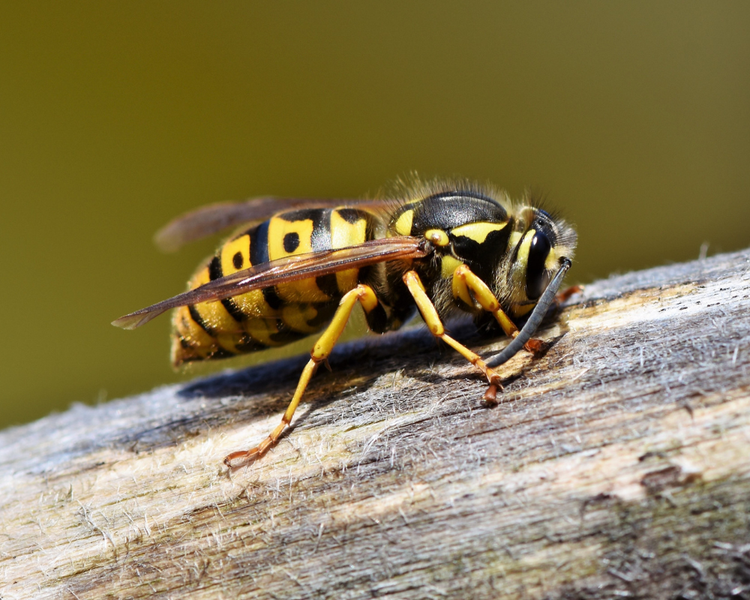
Bald-faced hornets are larger and more robust than a yellowjacket — 15 to 20 mm — and unmistakably black with a striking ivory-white face and white markings near the tip of the abdomen. The nest is the most reliable identifier of all, so read it alongside the insect.
| Feature | Bald-Faced Hornet | Yellowjacket |
|---|---|---|
| Colour | Black with ivory-white face | Bright yellow and black |
| Size | Larger, 15–20 mm, robust | Smaller, 10–15 mm |
| Nest | Large enclosed grey “football,” aerial | Underground or in wall voids |
| Nest location | High in trees, shrubs, on walls and soffits | Ground holes, hidden cavities |
| Defence | Very aggressive; sprays venom | Very aggressive; hidden |
The mature nest is a large ball of grey paper — a tough, multi-layered envelope of chewed wood fibre and saliva — fully enclosed with a single entrance near the bottom. Early-summer nests are golf-ball to softball sized; by late summer they reach 30 to 60 cm across. Our nest identification guide shows how it differs from a paper wasp comb and a hidden ground nest.
Life Cycle
An overwintered queen founds the nest in late spring, building a small paper envelope and raising her first workers alone. Through summer those workers expand the nest and take over foraging while the queen lays, and the colony grows to several hundred workers at peak — among the largest colonies in its genus. Late in the season the nest produces new queens and males; the males die after mating, only mated queens overwinter, and after the first hard frost the workers and old queen die. The nest is abandoned and never reused, which is why the grey ball left hanging in a bare winter tree is harmless.
Habitat & Behaviour
Bald-faced hornets build aerial nests in the open — hanging from sturdy tree branches and tall shrubs, tucked under eaves and soffits, or against the high peaks of a roofline, and sometimes on sheds, fences, and play structures. They post guard hornets at the entrance to watch for threats and mount a coordinated defence when the nest is disturbed, chasing perceived intruders well away from it. Because the nest is often at or above head height and in a spot people pass beneath, encounters are common as the colony grows.
Diet
For most of the season, bald-faced hornets are predators, hunting flies, caterpillars, and other insects — including other yellowjackets — to feed their larvae, which makes them useful garden allies away from the house. The adults take nectar and sugars, and like other social wasps they turn to sweet human food sources in late summer as natural food thins. That late-season scavenging brings them to patios, garbage, and open drinks alongside yellowjackets.
Signs of Infestation
- A grey, enclosed, football-shaped paper nest hanging in a tree, shrub, or under an eave, with a single bottom entrance. This is the definitive sign.
- Large black-and-white hornets flying to and from the nest along a consistent route.
- Guard hornets at the nest entrance, visibly watching passers-by.
- Aggressive approaches when you come within several metres of the nest.
- Late-season scavenging around outdoor food and garbage as the colony peaks.
Damage Caused
Bald-faced hornets don’t damage the structure of a home — the paper nest is a seasonal, lightweight shell and the hornets don’t bore or chew building materials. The concern is entirely the sting hazard created by where the nest hangs. A large aerial nest over a walkway, deck, patio, or doorway effectively closes off that part of the property, and a nest on a commercial building near an entrance is a direct liability.
Health Risks
Bald-faced hornets are among the more hazardous stinging insects Ontario homeowners encounter. Their stingers are smooth, so they sting repeatedly, and they’re highly defensive of the nest, chasing threats over a distance. According to pest-control authority Ehrlich, they can spray venom toward the eyes of an intruder — reportedly from several feet away — causing intense pain and temporary blindness. That single fact is why “knock it down yourself” is the wrong plan: you can be stung many times and partially blinded before you’ve moved ten feet. For anyone with a venom allergy a sting is a medical emergency, and a large nest holding hundreds of defenders raises the stakes for the whole household.
Seasonal Activity in Ontario
Overwintered queens found new nests in late spring and early summer. In late June most nests are still golf-ball sized and lightly defended — the safest, cheapest window to remove one. Through July and August the colony enters fast growth, and by late summer the nest is football-sized and packed with defenders at peak aggression. Across the GTA and Simcoe County, properties bordering trees, ravines, and green space see the most aerial nests — from Vaughan and Hamilton backyards to Whitby hedges — and cottage-country homes near Muskoka are squarely in range. The colony dies off after the first hard frost. If you live near a wooded lot, early summer is the week to scan your eaves and treeline.
Where They Hide
Sturdy tree branches and tall shrubs, under eaves, soffits, and porch roofs, against high wall corners and roof peaks, and on sheds, fences, and play structures. The common factor is a sheltered aerial anchor point, often high and often over ground people use.
How They Enter Homes
Bald-faced hornets nest in the open air rather than inside the building envelope, so they rarely end up in wall voids the way yellowjackets do. Indoor encounters are usually incidental — a hornet slipping through an open door or torn screen — rather than an established indoor nest. The risk is proximity of the outdoor nest to doorways and windows, not infestation of the interior.
Prevention Tips
- Walk your property in early summer, checking eaves, soffits, tree and shrub branches, sheds, fences, and play structures for golf-ball-sized grey nests.
- Note, don’t poke — if you find a nest, mark its location from a safe distance; never spray it, hit it, or seal an active entry.
- Keep garbage and recycling closed and rinsed, and cover food and drinks outdoors in late summer.
- Clear fallen fruit and cover compost to cut late-season food sources.
- Check overhead before sitting beneath a porch roof or deck cover, where a sheltered aerial nest can hide.
- Deal with a small nest early — a June golf ball is a quick job; the same nest in August is a football full of defenders.
DIY vs. Professional Treatment
DIY removal of a bald-faced hornet nest means standing within sting-and-spray range of an insect that defends its home aggressively, often at dusk and frequently up a ladder. The “savings” of a can of spray are measured against repeated stings, a possible eye injury, an allergic-reaction risk, and a nest that often survives a half-treatment and rebuilds. For a homeowner who values their time and safety, the math isn’t close. A licensed technician removes the nest in a single visit with proper protective equipment, treating the colony at the source so it can’t recover, and where accessible takes the physical nest down — all backed by Sani IQ’s Pest-Free-Or-It’s-Free guarantee; our DIY-versus-professional breakdown and plans and pricing lay out the full trade. Book it while it’s small and get your backyard back through year-round residential pest control. Our bald-faced hornet field alert covers the season in detail.
References
- Penn State Extension — Baldfaced Hornet
- University of Maryland Extension — Social Wasps: Yellowjackets, Hornets, and Paper Wasps
- Health Canada — Wasps
Last updated: July 16, 2026 · Reviewed by Sani IQ licensed technicians