
Overview
“Wasp” is a broad category, and in Ontario it covers a handful of species that behave very differently around your home. Most stinging-insect calls involve just three: yellowjackets, which nest underground and in wall voids; paper wasps, which build open umbrella combs under eaves and decks; and bald-faced hornets, which hang large grey paper “footballs” in trees. Two others round out the group: the European hornet, Ontario’s only true hornet, increasingly reported in Muskoka and cottage country; and the mud dauber, a solitary, docile wasp that rarely needs any treatment at all.
Telling them apart matters, because where a species nests and how fiercely it defends that nest decides how urgent the problem is — and whether it’s a job you can handle or one that belongs to a licensed technician. Every Ontario colony lives a single season, peaks in size by late summer, and turns noticeably more aggressive as the food supply shrinks and the population climbs. Unlike a honeybee, a wasp can sting repeatedly.
How to Tell Ontario’s Wasps & Hornets Apart
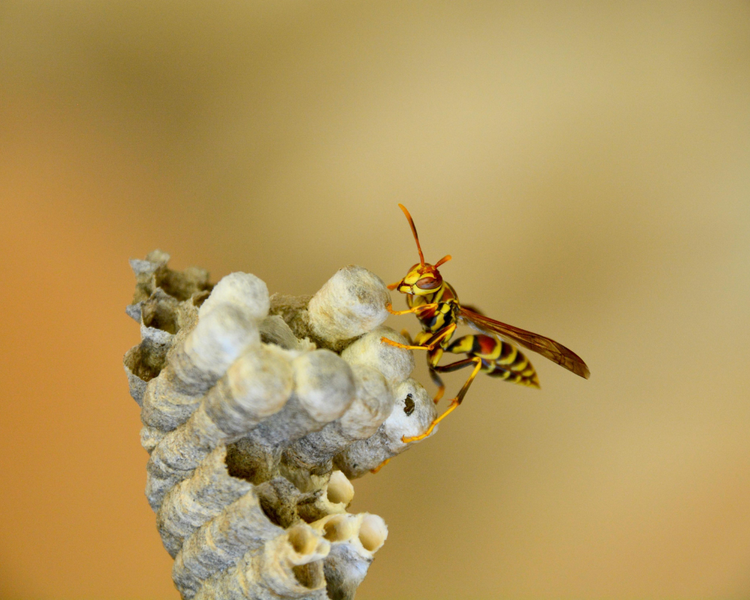
The fastest identification usually comes from the nest, not the insect. An open, umbrella-shaped comb means paper wasps; a grey enclosed ball in a tree means bald-faced hornets; steady traffic to a hole in the lawn means yellowjackets; and a cluster of hardened mud tubes means a mud dauber. The table below adds the body detail.
| Species | Size & colour | Nest | Behaviour |
|---|---|---|---|
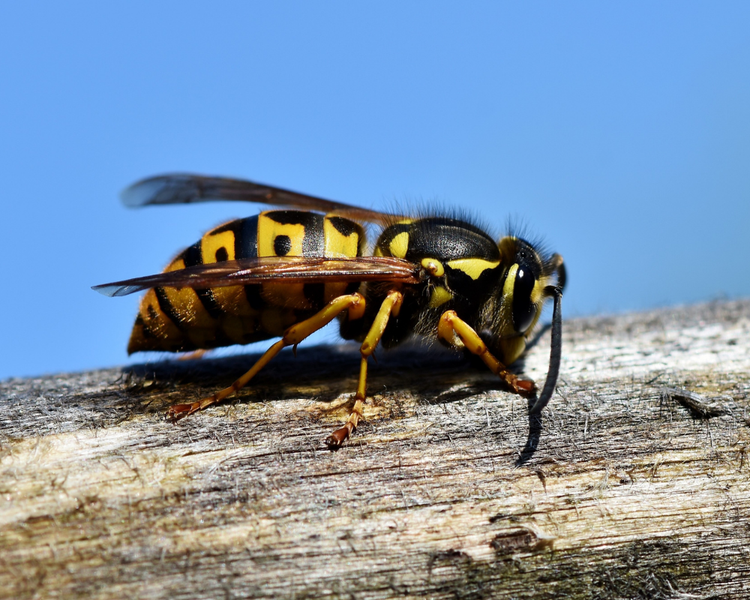
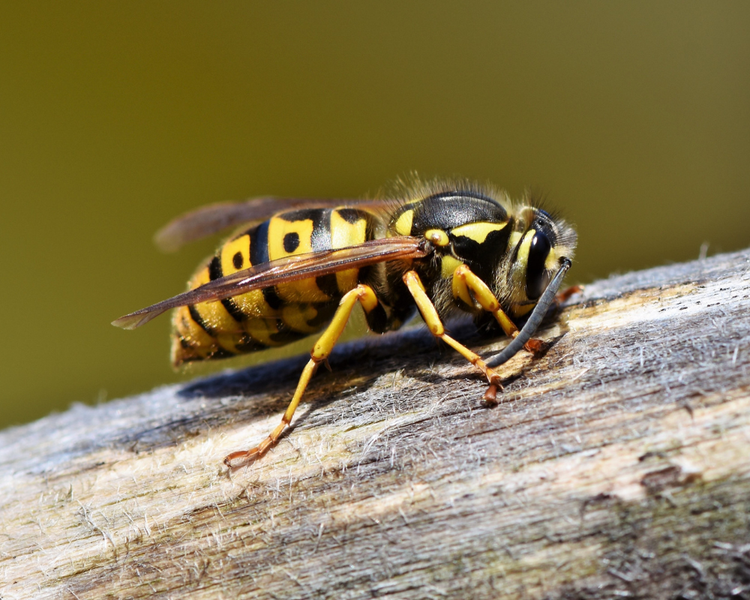
| Yellowjacket | 10–15 mm, bright yellow and black, stout | Underground or in wall voids; enclosed grey paper comb | Highly defensive; scavenges food in late summer |
| Paper wasp | ~20 mm, slender, long dangling legs, brownish | Open umbrella comb under eaves, railings, decks | Least aggressive of the social wasps unless the nest is touched |
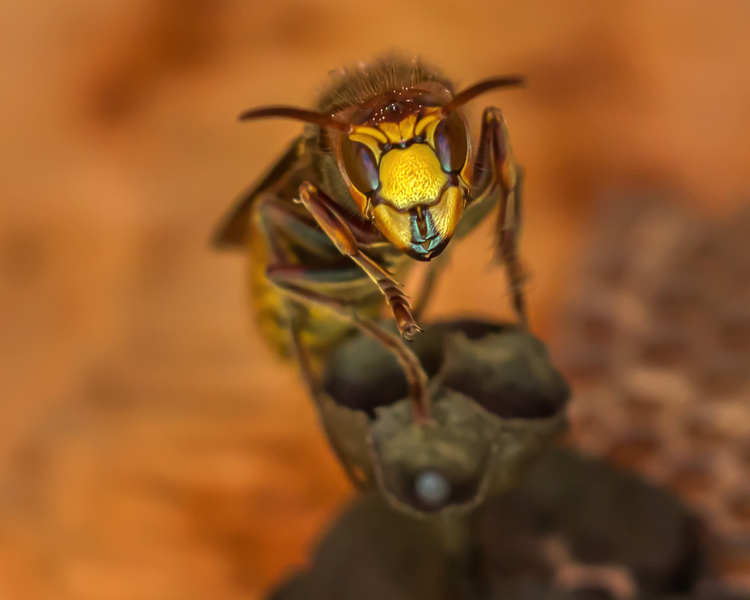
| European hornet | 25–35 mm, reddish-brown and yellow | Hollow trees, wall voids, attics | Less aggressive but defends the nest; active at night, drawn to lights |
| Bald-faced hornet | 15–20 mm, black with ivory-white face | Large grey enclosed “football,” high in trees or on walls | Very defensive; stings repeatedly, can spray venom |
| Mud dauber | 20–25 mm, slender, often metallic or black-and-yellow | Small hardened mud tubes on sheltered walls | Solitary and docile; rarely stings |
One field note worth carrying: the bald-faced hornet is not a true hornet at all. Cornell University’s Integrated Pest Management program classifies it as a large black-and-white yellowjacket, which is why its enclosed paper nest looks like an oversized aerial yellowjacket nest.
Damage & Health Risks at a Glance
Wasps don’t damage your home’s structure the way carpenter ants or termites do — the concern is the sting. Wasps and hornets have smooth stingers they can use repeatedly, and a disturbed colony can deliver many stings in seconds. For most people a sting is painful but minor; the real danger is anaphylaxis in the small share of people with a venom allergy. The Canadian Paediatric Society notes that systemic allergic reactions to insect stings affect an estimated 0.4% to 0.8% of children, and anaphylaxis to stings has been reported in about 3% of adults. Statistics Canada data reported by CBC News found 40 Canadians died from bee, wasp, or hornet stings between 1999 and 2011 — rare in the population, but severe for those it affects.
The risk is not spread evenly across the species. A mud dauber nest on your shed wall is effectively harmless. A ground yellowjacket nest a lawnmower is about to roll over is the wasp problem most likely to send someone to the emergency room. For restaurants, patios, and commercial properties, a nest over an entrance is also a customer-safety and liability issue, not just a nuisance.
Seasonal Pattern in Ontario
Ontario’s social wasps run on a single-season clock. Fertilized queens overwinter in bark, sheds, and attic insulation, then emerge as temperatures climb past 10–15 °C — usually late April into May — to build small starter nests alone. The first workers emerge in late May and June, the queen shifts to full-time laying, and the colony enters its fast-growth phase, roughly doubling every two to three weeks through the summer heat. Populations peak in August and September, which is also when the workers turn most aggressive: the queen stops laying, the larvae that fed the workers sugary saliva disappear, and thousands of hungry wasps switch to scavenging your food and drink. The whole colony dies after the first hard frost in October or November, and only next year’s queens survive.
Cottage country — Muskoka, Orillia, Lake Simcoe, and the wider Simcoe County belt — is especially exposed, because a nest can build undisturbed for weeks between visits and an owner can arrive for a long weekend to find a mature colony. Seasonal properties should get a 10-minute walk-around before the first guests of summer.
When to Call a Professional
The honest rule of thumb: a small, fully exposed paper-wasp nest you can reach with both feet on the ground is a reasonable DIY job early in the season. Everything else — anything larger than a tennis ball, in a wall, soffit, roofline, or underground, or belonging to an aggressive species like a yellowjacket or bald-faced hornet — is a job where the sting risk outweighs the price of a service call. A hidden nest can’t be sized from outside, and sealing an active one traps wasps that will chew into living space to escape.
A licensed technician identifies the species, treats the colony at the nest entrance so returning foragers are eliminated too, and — where accessible — removes the nest, backed by Sani IQ’s “Pest-Free-Or-It’s-Free” guarantee. Mud daubers are the one exception: they’re docile enough that a scrape with a putty knife is usually all that’s warranted. For everything social and defensive, book it while the nest is small. See our full wasp and hornet field guide for the deep dive.
References
- Health Canada — Wasps
- University of Maryland Extension — Social Wasps: Yellowjackets, Hornets, and Paper Wasps
- University of Minnesota Extension — Wasps and Bees
Last updated: July 16, 2026 · Reviewed by Sani IQ licensed technicians