
Scratching or Flapping in Your Chimney? How to Tell What's In There (Ontario)
Quick answer: Daytime chirping or twittering that rises and falls is almost always chimney swifts — a federally protected bird you legally cannot evict until the young have flown. Heavy scratching, thumping and chittering at night, usually starting at dusk, is a raccoon, most often a female setting up a den. Light, papery fluttering with no vocal sound is a bird or a bat. Whatever it is: do not light a fire, and do not cap the chimney until you know the flue is empty. Call Sani IQ at (705) 302-1887 for a $95 inspection, credited when you book the treatment.
The first cold night of the season is when most Ontario homeowners find out they have a tenant. You go to use the fireplace for the first time since spring, and something upstairs in the flue moves. It is one of the most common fall calls we take across the GTA, York Region and cottage country — and one of the easiest to make far worse in the first ten minutes.
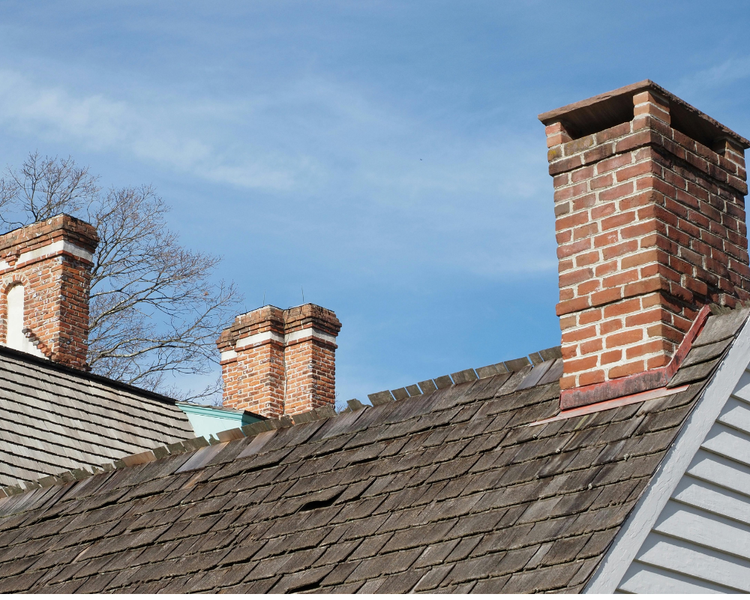
An open masonry chimney is, from a wildlife point of view, a hollow tree: vertical, rough-walled, sheltered, warm at the bottom and impossible for predators to reach. Every species that dens or roosts in hollow trees will use one. The good news is that you can usually narrow down what you are dealing with before anyone climbs a ladder, because each animal sounds different and keeps different hours.
Diagnose it by sound and time of day
Daytime chirping, twittering, or a rolling chatter — chimney swifts. Swifts are small, cigar-shaped birds that cannot perch; they cling vertically to rough surfaces, which is exactly what an unlined brick flue offers. A nesting colony is loud, especially when the parents return to feed. Swifts are a threatened species in Canada and are protected under the Migratory Birds Convention Act. You cannot legally remove them, block them in, or destroy the nest while the birds are present. You wait until they migrate — typically out of Ontario by late September into early October — and then you cap the chimney so next spring’s birds choose somewhere else. Details on protected species are published by Environment and Climate Change Canada.
Heavy scratching, thumping, chittering or a low churring after dark — raccoon. Raccoons are the loudest tenant you can have. An adult moving inside a flue sounds like someone dragging a bag of gravel. If you hear high-pitched trilling or crying mixed in, there are kits. In Ontario, raccoons den in fall and again in early spring, and a female that finds an uncapped chimney in September often keeps it through winter. Raccoon droppings in a flue are also a health consideration — the roundworm risk is real enough that cleanup is not a homeowner job.
Rapid, papery fluttering with no voice — a bird that fell in, or bats. A starling or pigeon that drops down a flue and cannot climb back out flutters in panic, usually near the damper, and the sound stops and starts. Bats are quieter still: a dry rustling at dusk as the colony leaves, and again before dawn as it returns. Bats in Ontario are protected and seasonally restricted — you cannot exclude them during the maternity period, and doing it wrong traps flightless pups inside a wall. If the sound points that way, read our guide to bats in the attic and the legal removal window in Ontario before anyone touches the chimney.
Buzzing, not scratching. Late-season wasps sometimes build in an unused flue or under the chimney chase cover. That is a different job entirely and a genuinely dangerous one on a roof.
If you want a second opinion on what you are hearing, our wildlife removal service page walks through what we handle and how exclusion work is scoped. Homeowners in Richmond Hill and Vaughan — older neighbourhoods with mature tree cover and a lot of unlined 1970s and 1980s masonry chimneys — account for a disproportionate share of these calls every October.
The never list
These four mistakes turn a $95 inspection into a structural problem.
Never light a fire to smoke it out. This is the single most common piece of bad advice on the internet. Adult raccoons can sometimes climb out; kits cannot, and birds cannot. You end up with dead animals wedged above the damper, a smoke problem, an odour problem that lasts months, and a flue that has to be opened up. It is also illegal to kill protected birds this way.
Never cap or screen the chimney until you are certain it is empty. Sealing a live animal into a flue is how a noise complaint becomes a demolition invoice. Exclusion always runs in this order: confirm what is inside, get it out on its own terms, then seal.
Never open the damper to “have a look.” If the animal is sitting on the damper — and raccoons often are — you have just given it the run of your living room.
Never set a trap in the flue yourself. Ontario’s wildlife rules on trapping and relocation are strict, and a trapped mother separated from kits leaves the kits in your chimney. The Ontario government publishes the rules for dealing with nuisance wildlife at ontario.ca.
How a chimney eviction actually works
The professional approach is boring by design, which is why it works.
First, an inspection confirms the species, whether there are young, and where else the animal has been getting in — a chimney is rarely the only opening on a house that has one. Second, if there are dependent young, they are removed by hand and placed where the mother will retrieve them; she will not abandon them, and she will move them herself. Third, a one-way door goes on the flue, letting the adult leave and not return. It stays in place for several days. Fourth — and only fourth — the chimney gets a stainless steel cap with spark-arrestor mesh, which is the permanent fix. A proper cap ends this problem for the life of the chimney and also keeps rain and leaf litter out of the flue.
Cottage owners have a particular version of this problem. A chimney at a seasonal property has no one listening to it for eight months of the year, so the animal is discovered at closing or at opening rather than on night one. If you are closing up around Orillia or in Muskoka this fall, the chimney cap belongs on the same checklist as the water shut-off — it is the one exclusion job that pays for itself the first winter it works.
Why the annual plan is the real answer here
Removing one raccoon from one flue solves one problem. It does not address the reason the raccoon chose your house over the eight others on the street.
Chimneys, soffit returns, roof-line gaps and deck skirting all fail on the same schedule, and an animal that gets excluded from the chimney in October is looking at the roof edge in November. A one-time wildlife visit is the entry point — the right way to handle an active animal today. What keeps the problem from repeating is annual protection: a documented perimeter, scheduled seasonal inspections of the entry points that actually fail, and a technician who already knows your building when something changes.
The economics are not close. A single raccoon denning season in an attic or chimney routinely produces contaminated insulation, damaged flue liners and a cleanup bill in the thousands. Sani IQ’s protection plans run from Insect Control at $845 per year and Complete Mice Protection at $895 per year through Essentials at $1,195, VIP from $1,395 and ELITE from $2,795 for properties that need the full perimeter program. Every service begins with a $95 professional inspection, credited in full when you book the treatment — there is no initiation fee, no setup fee and no monthly billing.
See what each tier covers on our plans and pricing page, or answer a few questions in the free quote quiz and we will tell you which one fits your property. If you would rather just talk to someone, call (705) 302-1887.
Sani IQ is BBB Accredited, holds a 5.0 rating across 126 Google reviews, carries $5M liability coverage, and is licensed under the Ontario Pesticides Act and registered with the Ministry of the Environment, Conservation and Parks. Our technicians are employed, licensed and background-checked — never subcontractors. Where treatment is involved, we use reduced-risk products and the minimum effective application.
Frequently asked questions
How do I know if the animal in my chimney has babies? Two tells: high-pitched trilling, crying or chirping mixed in with the adult’s movement, and an adult that leaves at dusk and returns within the hour rather than staying out all night. If you hear either, assume there are young and do not seal anything. Removing an adult and leaving kits behind is the worst possible outcome for both the animals and your chimney.
Can I just put a cap on the chimney myself? You can, once it is confirmed empty — and you should, because it is the permanent fix. The danger is capping a flue that still has something in it. If you have heard any sound in the last two weeks, have it checked before the cap goes on.
Are chimney swifts really protected? They’re just birds. Yes. Chimney swifts are listed as threatened in Canada and protected under the Migratory Birds Convention Act. Disturbing an active nest carries real penalties. The practical upshot is simple: if it is swifts, you wait for migration, then cap. The wait is usually a few weeks, not a season.
What time of year is worst for animals in chimneys in Ontario? Two peaks. Late September through November, as raccoons look for winter denning sites and homeowners light first fires. And March through May, when raccoons have kits and swifts return. Fall is the better window to fix it, because you can exclude and cap before anything is born inside.
Does homeowner’s insurance cover chimney damage from wildlife? Usually not. Most Ontario policies treat animal intrusion as a maintenance issue rather than sudden accidental damage, and specifically exclude damage from rodents, birds and vermin. Read your own policy — but plan on the exclusion and the cap being your cost, which is precisely why prevention is cheaper than the claim.
Will the animal leave on its own if I wait? Sometimes, and then come back. A chimney that worked once works again. Without a cap, the same flue gets reused season after season, often by different animals. The removal is temporary; the cap is the fix.
To identify what you are dealing with before you call, our raccoon identification page in the Sani IQ pest library covers the signs, habits and seasonal behaviour in detail.
⚡ NO PHONE CALL NEEDED
Know your exact price in 60 seconds3 quick questions — matched to the right treatment with real, published pricing. Instantly.
Take the Quiz📖 FREE EXPERT RESOURCE
Identify any Ontario pest69 free identification guides — photos, habits, risks and prevention. No sales pitch, just answers.
Browse the Pest Library🛟 HELP CENTRE
Before & after your visitPrep checklists, what to expect and aftercare — written by our technicians so your treatment works the first time.
Visit the Help CentreFix it today. Keep it fixed all year.
Sani IQ Protect: from $77/month, with FREE rodent prevention. Smarter Protection.
Quarterly service handles ants, spiders and wasps before summer and keeps mice out before the first frost, with free re-service if anything returns between visits and a photo report every time. Mice already inside? Protect Plus removes them and keeps them out.