
Overview
The German cockroach (Blattella germanica) is the roach behind almost every serious indoor infestation in Ontario. Unlike species that wander in from sewers or woodpiles, it lives its entire life inside — breeding, feeding, and sheltering within the warm, humid pockets of your kitchen and bathroom. It is the most common household cockroach in the world and the fastest breeder in Canada, which is why a single sighting is never really “one roach.” A small, light-brown insect darting behind the stove when the lights flick on is how most Ontario infestations announce themselves, and by the time you see it in daylight, the population is usually well established. Our complete Ontario cockroach field guide sets this species in context alongside the others.
Identification
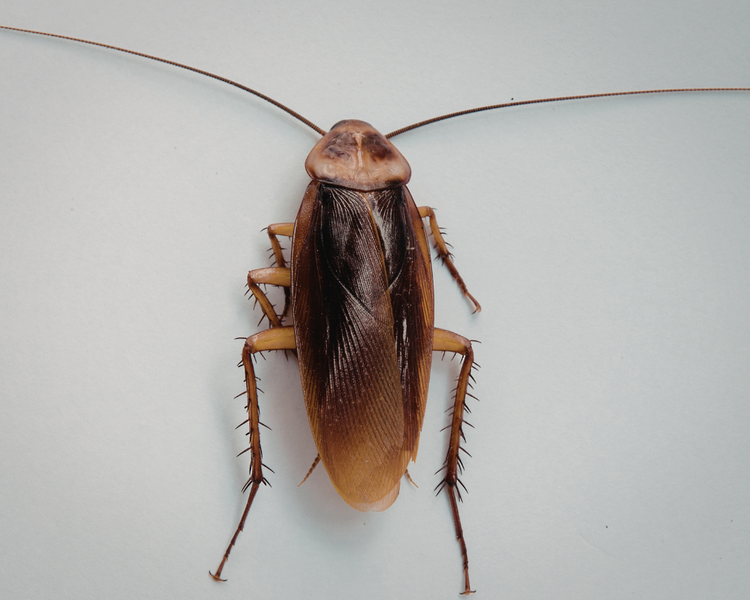
Adult German cockroaches measure 13 to 16 millimetres — roughly half an inch — and are light brown to tan. The giveaway is a pair of dark, parallel stripes running from behind the head to the base of the wings. They have fully developed wings but rarely fly, preferring to run at speed. Nymphs are smaller and darker, almost black, but carry the same two stripes; seeing them means breeding is active on site — our deep dive on German cockroach identification and behaviour walks through the finer points. The species is often confused with the brown-banded cockroach, which is similar in size but marked with light bands across the wings rather than lengthwise stripes and prefers drier, higher rooms.
| Feature | German Cockroach | Brown-Banded Cockroach |
|---|---|---|
| Markings | Two lengthwise dark stripes behind head | Light bands across wings and abdomen |
| Size | 13–16 mm | 12–14 mm |
| Where it hides | Kitchens, bathrooms — near water | Warm, dry, high spots — near electronics |
| Moisture need | High | Low; tolerates dry rooms |
Life Cycle
The German cockroach’s reproductive power is the whole problem in one number. A female produces a specialised egg case called an ootheca, holding 30 to 40 eggs, and carries it attached to her abdomen until the eggs are nearly ready to hatch — a behaviour that dramatically raises survival rates. A single female can produce up to eight oothecae in her lifetime. Once hatched, nymphs pass through six or seven moults and can reach adulthood in as few as six weeks in a heated home. That pace allows three to four generations a year indoors, and by widely cited estimates a single female and her offspring can produce over 30,000 cockroaches in a year under warm conditions.
Habitat & Behaviour
German cockroaches are “cryptic” insects — they actively avoid light and human contact, emerging two to three hours after the lights go out to forage along edges and baseboards. The kitchen is ground zero: behind the refrigerator and stove motor, inside cabinet hinges and door tracks, under the sink near plumbing, and inside dishwasher control panels. Any appliance that generates heat is a potential harbourage. When food is scarce they prioritise moisture and migrate to bathrooms. They also emit aggregation pheromones that tell other roaches where the safe spots are, which concentrates them in specific voids — and, usefully, makes targeted baiting more effective.
Diet
German cockroaches are omnivorous scavengers. They feed on almost anything a kitchen offers — crumbs, grease, starches, sweets, pet food, and even soap residue or cardboard glue. This broad diet is part of why they thrive in human dwellings and why sanitation alone rarely starves them out. It also matters for treatment: many populations have evolved glucose aversion, tasting the sugar used to make baits palatable as bitter, which is why professionals rotate modern bait formulations — part of the broader story of why cockroaches survive almost anything.
Signs of Infestation
- Pepper-like droppings — tiny dark specks that look like coarse ground pepper or coffee grounds, along baseboards, inside cabinet hinges, and behind the stove. Heavy accumulation near a heat source marks a primary nest.
- Egg cases (oothecae) — small, brown, ribbed capsules about 6 to 8 millimetres long; empty casings near appliances mean active breeding.
- A musty, oily odour — a well-established colony gives off a distinctive stale smell that intensifies in enclosed spaces.
- Grease and smear marks — dark streaks along baseboards and cabinet bottoms where roaches repeatedly travel.
- Daytime sightings — the highest-urgency sign, indicating overcrowded harbourages; our guide on what one sighting really means explains why.
Damage Caused
German cockroaches don’t damage the structure of your home the way wood-destroying insects do. The cost they impose is different: contaminated food and surfaces, spoiled dry goods, and the allergen load they build up behind your cabinets. In multi-unit buildings, an untreated unit acts as a reservoir that re-infests neighbours through shared plumbing and wall voids, turning a private nuisance into a building-wide expense.
Health Risks
This is where German cockroaches earn their “High” danger rating. Their droppings, saliva, shed skins, and egg debris contain proteins that are a well-documented trigger for asthma and allergic reactions — a landmark study linked combined exposure and sensitisation to significantly more asthma symptoms, lost sleep, and missed school in children. Because roaches walk through garbage and drains, they also pick up bacteria such as Salmonella, E. coli, and Staphylococcus and transfer them to food and utensils as they forage. For restaurants and commercial kitchens under health inspection, that food-safety risk makes even a single sighting a serious matter.
Seasonal Activity in Ontario
Because German cockroaches live indoors in stable, heated conditions, they breed year-round in Ontario — there is no winter reprieve the way there is for outdoor pests. Summer heat accelerates the cycle, and recent milder winters have kept the thermal refuges in apartment buildings — wall voids around hot-water pipes, mechanical rooms, shared laundry — warm enough that populations never thinned. GTA density makes spread between units a real risk, which we cover in our reports on surging apartment infestations and Markham townhomes and condos.
Where They Hide
Indoors, focus on warmth and water: the fridge motor compartment, behind and under the stove and dishwasher, the top inside corners of upper cabinets, under-sink plumbing, hollow cabinet voids, and cracks around the backsplash. In heavier infestations they spread to any warm crevice — clock radios, small appliance motors, and the undersides of furniture near the kitchen.
How They Enter Homes
German cockroaches rarely march in from outdoors — they are usually carried in. The classic routes are grocery boxes, second-hand appliances and furniture, cardboard shipments, and personal bags. In apartments and attached housing, they also travel through shared plumbing chases, electrical conduits, and wall voids from an infested neighbouring unit, which is why building-aware treatment matters so much in the GTA.
Prevention Tips
- Fix moisture first — repair dripping taps and dry the sink and tub before bed; roaches need water more than food.
- Deny food — store dry goods and pet food in airtight glass or hard-plastic containers and wipe grease nightly.
- Seal the highways — caulk gaps around the backsplash, baseboards, and plumbing penetrations where roaches harbour and travel.
- Cut the clutter — cardboard and paper piles are prime harbourage and a food source; switch to sealed bins.
- Take out organics daily in warm months so bin residue isn’t a buffet.
- Inspect what comes in — check grocery boxes, used appliances, and second-hand furniture before they cross the threshold.
- Act on the first sighting — book an inspection while numbers are still small.
DIY vs. Professional Treatment
Store baits and sprays can thin the visible population, but against German cockroaches they usually lose. Repellent sprays scatter the colony deeper into voids and adjacent units, resistance means many products simply don’t kill, and the egg cases survive sprays entirely — so the infestation returns weeks later. Professional treatment is the opposite of a fog: a technician inspects to find the harbourage, places precise dots of gel bait where roaches actually live, and returns in 2 to 3 weeks to catch the nymphs hatching from protected eggs. Sani IQ backs every job with our Pest-Free-Or-It’s-Free guarantee. For the honest cost picture, see our Ontario price guide and Toronto cost breakdown, or read exactly what a treatment involves. You can see current rates on our plans and pricing page or request a quote to get started.
References
Last updated: July 16, 2026 · Reviewed by Sani IQ licensed technicians