
Fleas in the House but No Pets? Here's Where They're Actually Coming From
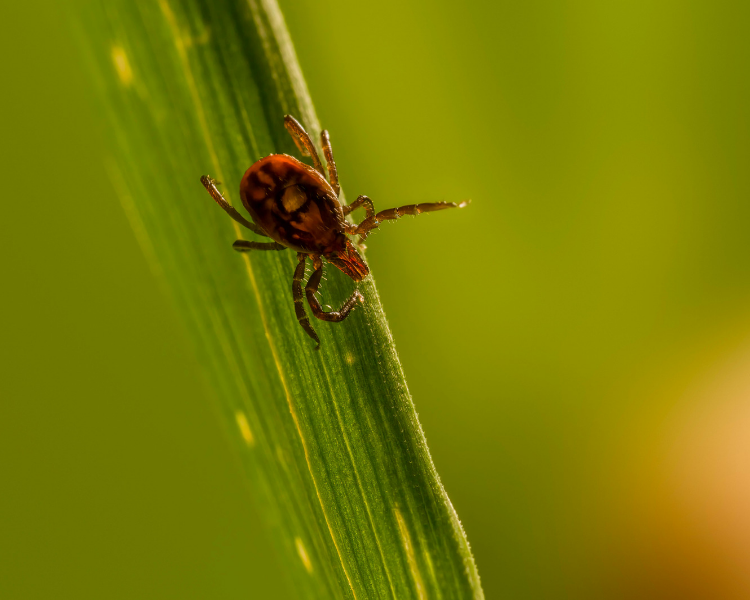
Quick answer: Fleas do not need a cat or a dog. They need a warm-blooded animal, and in an Ontario house in November that animal is usually a mouse in a wall void, a squirrel in the attic, or a raccoon under a deck. Health Canada puts peak flea season in most of Canada between early August and early October, but a heated house never cools to the temperature that stops fleas breeding, so an indoor population carries on long after the outdoor one has stopped. If you are being bitten around the ankles with no pet in the home, the fleas are not the whole problem. Something is hosting them, and until that animal is found and shut out, treating the carpet only buys you a few weeks.
Peak flea season ended weeks ago, so why are you being bitten now?
Health Canada’s guidance on fleas puts peak flea season across most of Canada between early August and early October. By mid-November the outdoor season is over.
Inside, it is not. The University of Missouri Extension’s publication on fleas is blunt about why: flea reproduction takes place indoors year-round, while outdoor reproduction is limited to the warm-weather months. The same publication notes that sustained temperatures below about 55°F inhibit flea development — and a Scarborough bungalow with the furnace running does not come near that, not in the finished basement, not in the wall voids, not under a bedroom floor above a heated crawlspace.
So November is not an odd time to find fleas in an Ontario home. It is the time of year when the only fleas left are the ones living inside a building — which means they are the ones with a host inside it. The useful question is not “how do I kill these fleas.” It is “what are they eating.”
Fleas do not need your pet
This is the part most homeowners get wrong, and it is the reason flea treatments fail in pet-free houses.
Cornell Cooperative Extension’s factsheet on fleas states it directly: wild animals have fleas too, and if those animals are living in homes, fleas may become a problem. Its prevention advice is to stop wild animals, especially rodents, from getting into and nesting in houses and other buildings. Utah State University Extension’s factsheet notes that most fleas infest mammals, including rodents, dogs, cats, rabbits and squirrels. The Missouri publication names rodents and pets as the most common sources of fleas and the diseases they carry.
Put those together and the pet-free flea call stops being a mystery. The candidates in an Ontario house, in rough order of how often we find them:
- Mice in the wall voids or above a dropped ceiling. October is when mice move indoors across southern Ontario. A population that established itself in a heated void last month is a flea host this month.
- A squirrel or raccoon in the attic or soffit. The animal nests above the insulation; the fleas end up in the insulation, then in the ceiling light boxes, then in the room below.
- An animal under a deck, shed, porch or in a crawlspace, with fleas working in through the rim joist, the sill plate or a basement window frame.
- A previous occupant’s pet — the one case where there may be no animal left at all. More on that below.
Which of these it is changes the entire job, which is why a flea problem in a house with no pet is an inspection question before it is a treatment question. That is the same logic behind everything in our residential pest control work: find the route and the source first, treat second.
The four places the fleas already are
Fleas are easy to underestimate because you only ever see the adults, and the adults are the smallest part of the population.
Cornell’s factsheet makes the scale clear: as eggs, larvae and pupae, fleas may spend ninety per cent of their time off the animal — on the carpet or the furniture. The animal is the feeding station. The house is the nursery.
The immature stages avoid light. Cornell describes larvae burrowing down into carpeting and hiding under bedding, and says they are often found in an animal’s resting places. Missouri’s publication puts them in floor cracks, rugs, carpets and animal bedding, and notes they prefer dark, moist environments. What they eat is not blood: Cornell lists organic debris including shed hair and skin, their own cast skins, and the faeces of adult fleas.
So in a pet-free house, the places to look are the places an animal rests: along the base of the walls it is nesting behind, under finished basement carpet, in the insulation around an attic hatch, and in the first metre or two of floor near a basement window or crawlspace access. Our flea library page covers identification if you want to confirm what you are looking at first.
A practical tell, straight from Health Canada: look for black particles about the size of ground pepper. On a pet you would check the skin near the tail; with no pet, check bedding, carpet edges and anywhere you have seen an animal sitting.
Why they all appear the day you walk back in
Here is the fact that explains the single most common version of this call — someone comes home from a week away, or takes possession of a house, and is swarmed at the ankles within minutes.
The flea pupa sits inside a cocoon, and it can wait. Missouri’s publication gives the pupal stage as typically five to seven days, but says it can last up to a year in unfavourable conditions, and that depending on conditions a fully formed adult can remain in the cocoon for up to five months waiting for a host. That same publication observes that infestations are often discovered by people returning home after a vacation, or moving into a new home, where hungry adult fleas have been waiting inside a cocoon for an extended period.
What wakes them up is you. Utah State’s factsheet says adult emergence is based on vibrations, heat and carbon dioxide from nearby hosts. Cornell says vibrations are known to promote emergence from pupae, and that walking across the floor may trigger it.
That is why a house can read as flea-free for a month and then produce dozens of adults in an afternoon. Nothing arrived. Something hatched, because you came back. And as Cornell puts it, hungry adult fleas often attack the first warm-blooded animal that comes in the door — which is why the bites are around the ankles and lower legs.
Health Canada also notes that some people and animals react allergically to flea saliva, and that fleas can transmit parasites such as tapeworms and diseases such as typhus. If bites are infected or a reaction is severe, that is a conversation for a doctor, not a pest control company.
What to do this week
Everything below is from Health Canada’s own flea guidance, plus two specifics from the university sources, and all of it is worth doing whether or not you call anyone:
- Vacuum daily, not weekly, while the problem is active — carpets and cushioned furniture, then the cracks, crevices and the line along the baseboards.
- Throw the vacuum bag out each time. Missouri’s publication warns that a bag left in the machine can itself become a source of reinfestation.
- Wash all bedding in hot, soapy water — human and animal. Health Canada’s detail here is a good one: lift blankets by all four corners so you are not shaking eggs and larvae across the floor on the way to the laundry.
- Steam-clean the carpet in the rooms where you are being bitten.
- Expect the vacuum to make it look worse first. Utah State notes that the vibration from a vacuum may itself trigger adult emergence. That is not a setback; it is the population coming out of hiding where it can be dealt with.
- If you buy anything, check the label for a PCP number — Health Canada’s marker that a product is registered by the Government of Canada. Note too that the insect growth regulators Health Canada names, methoprene and pyriproxyfen, stop larvae developing into adults but do not kill the adults already in the room, so one product rarely does the whole job.
- Plan on a second pass. Missouri’s publication notes a follow-up application is usually needed ten to fourteen days after the first, because eggs and pupae are more resistant than adults.
What none of that does is remove the host.
The part that actually ends it
In a house with a cat or a dog, flea control is a two-part job: treat the animal and treat the structure, at the same time. Cornell is explicit that the pet must be treated in parallel, and Health Canada recommends asking a veterinarian first, since vets can prescribe products that are not sold over the counter.
In a house with no pet, the animal is still half the job — you just have to find it first. And this is where a flea problem becomes a rodent or wildlife problem wearing a different hat.
If the host turns out to be mice, the order of operations matters. Our rodent work is exit-first by design: we treat and station on day one and deliberately leave the exit routes open, so the mice leave the structure and die outside rather than in your wall. We return at about the three-week mark to verify the population is actually gone, and only then seal every entry point we found on the first visit. Sealing a building on day one is how you end up with a dead mouse in a wall void — and the fleas it was carrying still inside, hunting for a new host.
The flea work runs alongside that: treatment in the harbourage areas, a verification visit, and the exclusion that stops the next animal getting in. Same shape as our year-round program — treat on day one, verify at about three weeks, seal every entry point we find, twelve-month warranty on the exclusion work, no monthly fees, billed after each visit.
Sani IQ is BBB Accredited, licensed under the Ontario Pesticides Act and registered with the Ministry of the Environment, Conservation and Parks. Our technicians are employed, licensed and background-checked. We use reduced-risk products and methods wherever they will do the job.
If you want to know what you are dealing with before committing to anything, take the two-minute quote quiz — it tells us enough about the building and the bites to say whether this reads as a pet-free flea problem with an animal behind it. What each level of service covers is set out on our plans and pricing page, and the inspection fee is credited in full when you book the treatment.
Or just call: (705) 302-1887.
Frequently asked questions
Can you have fleas in a house with no pets at all? Yes, and it is more common than people expect. Cornell’s extension factsheet notes that wild animals carry fleas, and that fleas can become a problem in a home those animals are living in. In an Ontario house in November, the most likely hosts are mice in the wall voids, or a squirrel or raccoon in the attic. There is also the no-host case: fleas left behind by a previous occupant’s pet, waiting in cocoons.
How long can fleas survive in an empty house? Longer than most people assume. The University of Missouri Extension gives the pupal stage as typically five to seven days but says it can last up to a year in unfavourable conditions, and that a fully formed adult can wait inside its cocoon for up to five months for a host to arrive. That is why a house that has been empty for a season can still produce fleas the day someone moves in.
Why am I getting bitten on my ankles and nowhere else? Because that is as high as they reach from the floor. Cornell’s factsheet describes hungry adult fleas attacking the first warm-blooded animal through the door and biting people around the ankles. Health Canada describes the bite as a small, hard, raised red spot with a single puncture point, often appearing in clusters or lines.
Will fleas die off on their own now that it is winter? Not indoors. Health Canada puts peak flea season in most of Canada between early August and early October, but that is the outdoor season. The Missouri publication notes that indoor flea reproduction continues year-round, and that development is only inhibited when sustained temperatures fall below about 55°F — which does not happen in a heated Ontario home.
Do I have to treat a pet if I do not have one? No, but you do have to deal with whatever is acting as the host. If an animal is nesting in or under the building, treating only the living space leaves the source in place, and the population rebuilds. That is why we inspect for the host and the entry routes before quoting flea work in a pet-free home.
Does vacuuming fix a flea problem by itself? Sometimes, if the problem is genuinely minor — the Missouri publication allows that frequent, thorough vacuuming might solve a small infestation. For anything established it is a necessary part of the job rather than the whole job. Health Canada recommends daily vacuuming of carpets and upholstered furniture plus cracks, crevices and baseboards, and says to contact a licensed pest control operator if the problem persists.
SERVICE IN YOUR AREA
Dealing with this right now? Mice & rodent control · Mice control in Scarborough
⚡ NO PHONE CALL NEEDED
Know your exact price in 60 seconds3 quick questions — matched to the right treatment with real, published pricing. Instantly.
Take the Quiz📖 FREE EXPERT RESOURCE
Identify any Ontario pest69 free identification guides — photos, habits, risks and prevention. No sales pitch, just answers.
Browse the Pest Library🛟 HELP CENTRE
Before & after your visitPrep checklists, what to expect and aftercare — written by our technicians so your treatment works the first time.
Visit the Help CentreFix it today. Keep it fixed all year.
Mice? The Sani IQ Rodent Program: $445 at the first visit, then $150 a quarter, 12-month warranty. Bugs too? Protect from $249 a visit.
Every visit is billed after it's done — no monthly fees. Free re-service if anything returns between visits, a photo report every time, and the stations stay in all year on the Rodent Program.