
Overview
Not every buzzing insect around your Ontario home is a problem — and with bees, the right response usually starts with identifying the species, not reaching for a spray can. Bees are pollinators. Honey bees are managed livestock protected under Ontario’s Bees Act, wild bumble bees and native mining bees are ecologically important, and several bee “problems” are so mild that the honest advice is to leave them alone until the colony dies out on its own.
That said, one bee genuinely damages homes. Carpenter bees bore into bare softwood — cedar fascia, pine decks, pergola beams — and their galleries widen year after year until woodpeckers and water finish the job. And a honey bee colony that moves into a wall void becomes a structural and sanitation problem, not because the bees chew wood, but because the honey and comb they leave behind rot, stain, and attract other pests. Knowing which of Ontario’s four common bees you’re dealing with tells you whether to call a beekeeper, call a pest professional, or simply wait out the season.
How to Tell Ontario’s Bees Apart
Size, body texture, and where you find them separate the four bees most Ontario homeowners encounter. Click through to each guide for full identification detail.
| Bee | Size | Appearance | Where you find it | Damages wood? |
|---|---|---|---|---|
| Honey bee | 12–15 mm | Amber-brown, banded, fuzzy | Swarms on branches; colonies in wall voids, chimneys, hollow trees | No (but comb rots in walls) |
| Bumble bee | 15–25 mm | Large, round, fuzzy, black-and-yellow bands | Ground burrows, under sheds, insulation, compost | No |
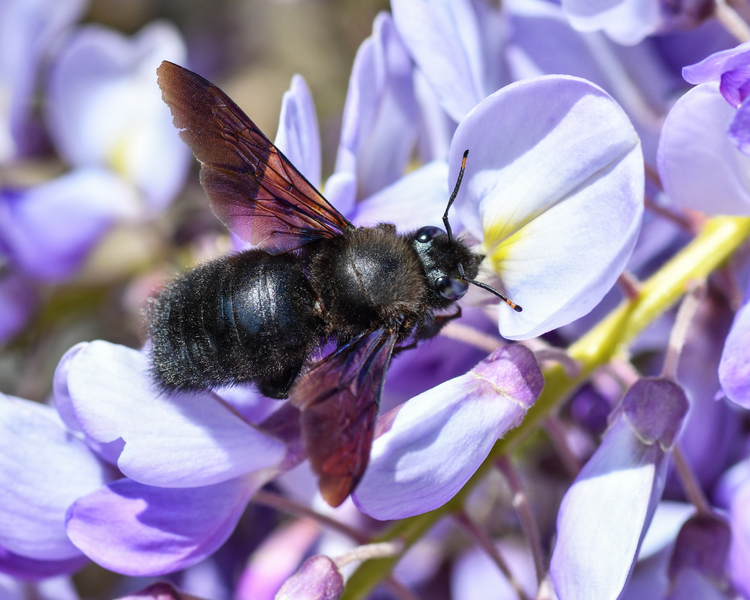
| Carpenter bee | 20–25 mm | Robust, shiny hairless black abdomen | Round holes in fascia, decks, soffits, fence posts | Yes |
| Mining bee | 8–17 mm | Slender, often reddish or dark, lightly furred | Small soil mounds in lawns and bare patches, spring only | No |
The most common mix-up is the carpenter bee versus the bumble bee: both are large, but a carpenter bee has a glossy, near-hairless black abdomen while a bumble bee’s is fuzzy and banded. That one detail decides whether you have a wood-boring problem or a harmless garden pollinator.
Damage & Health Risks at a Glance
Most bees are far less dangerous than their reputation. Honey bees, bumble bees, and mining bees sting only when handled or when a nest is directly threatened, and male carpenter and mining bees can’t sting at all. The real risks are narrow and specific:
- Structural damage — carpenter bees only. Their galleries weaken fascia, trim, and deck framing over successive seasons.
- Secondary damage — honey bee colonies in walls. Abandoned honey ferments, stains drywall, and draws ants, wax moths, mice, and skunks.
- Sting allergy — anyone with a known bee-venom allergy should treat any active nest near a doorway or high-traffic area as a priority regardless of species.
For genuinely aggressive stinging insects, you’re likely looking at wasps or hornets rather than bees — see our wasp control service.
Seasonal Pattern in Ontario
Bee activity tracks Ontario’s warm season closely. Mining bees appear first, in April and May, then vanish within a few weeks. Honey bee swarms peak from May into July as established colonies split and send out swarms looking for a new home. Carpenter bees emerge in spring, with a fresh generation of adults drilling most actively in June. Bumble bee colonies build through summer and are most noticeable in July and August, then die off entirely at the first hard frosts — only new queens survive winter underground. By late fall, most bee activity across the GTA and cottage country has ended for the year.
When to Call a Professional
Call for a honey bee swarm only after contacting a beekeeper first — a swarm on a branch is almost always relocatable and shouldn’t be killed. For an established honey bee colony inside a wall or chimney, you need a professional to remove the bees and the comb. Carpenter bees warrant a call once you see more than a couple of galleries, because the wood is already being reused. Bumble bees and mining bees rarely need treatment at all; the main exception is a bumble bee nest beside a doorway used by someone with a sting allergy. Sani IQ’s residential team will identify the species honestly and recommend the least invasive option — including doing nothing when that’s the right call.
References
- Ontario Beekeepers’ Association — Found a Swarm of Honey Bees?
- Government of Ontario — Using Pesticides in Ontario
- Xerces Society — Bumble Bees: Nesting and Overwintering
Last updated: July 16, 2026 · Reviewed by Sani IQ licensed technicians