
Your Mouse Traps Aren't Catching Anything. Here's What That Actually Tells You
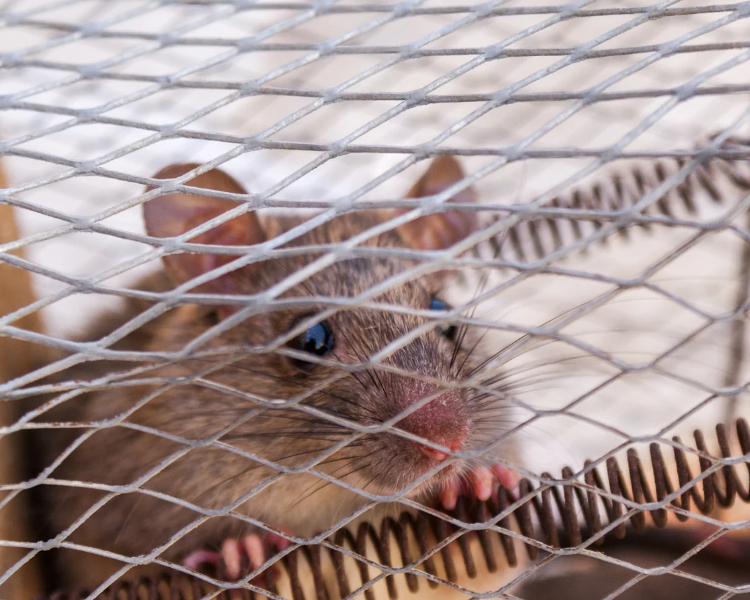
Quick answer: If your mouse traps have sat untouched for several nights, the most likely explanation is not that the mice are gone, and not that they are too clever for the traps. House mice are not cautious of new objects — research on mouse behaviour describes them detecting new things quickly and showing no fear of them. An untouched trap almost always means the trap is not sitting on a route a mouse actually uses. A mouse spends its entire life inside a space roughly thirty feet across, so a trap placed four metres from its runway may as well be in another building. Move the traps, don’t replace them.
An empty trap is a measurement, not a failure
Most people set mouse traps the same way: two or three of them, in the middle of the basement floor or beside the stove, baited generously with peanut butter. Three nights later the traps are exactly as they left them, and they draw one of two conclusions. Either the mouse is gone, or the mouse is smarter than the trap.
Both conclusions are usually wrong, and both are expensive. The first leads people to stop looking while a population keeps breeding through the winter. The second leads them to buy a different kind of trap, which they then place in exactly the same wrong spot.
There is a third reading, and it is far more useful: an untouched trap is a piece of information about your house. It tells you, fairly precisely, that mice are not walking over that square foot of floor. That is worth knowing. It narrows the search.
A mouse’s whole world is about thirty feet wide
The single most useful fact about house mice is how little ground they cover. The University of California’s integrated pest management program states plainly that “house mice seldom venture more than 30 feet from their nest sites and food supply.” Wildlife-damage researchers put it in similar terms, describing one mouse as travelling “an area averaging 10 to 30 feet in diameter during daily activities.”
This is the opposite of how most people picture it. A mouse is not roaming the house. It has a nest, it has a food source, and it shuttles between them along a route it has memorised — leaving and returning to the nest as many as forty times in a day, according to the same wildlife-damage literature.
That changes the whole problem. You are not trying to catch a wanderer. You are trying to intersect a short, fixed, heavily-used path. If your trap is not on that path, nothing you put on it matters.
It also explains something homeowners across the GTA notice and misread. In the older housing stock through Markham and the surrounding York Region communities — homes with finished basements added over original block foundations, cold rooms, and utility chases running up from the slab — mice frequently establish themselves in a single corner of a single level and never appear anywhere else. The family upstairs sees nothing for months. If that sounds like your house, our Markham mice page covers how entry points tend to run in that building type. The absence of evidence elsewhere is not evidence of absence; it is the thirty-foot rule doing exactly what it does.
”Trap-shy” is the wrong diagnosis
There is a persistent idea that mice learn to avoid traps. It gets repeated constantly, usually borrowed from writing about rats, and it sends people down a dead end.
House mice do not behave that way. The wildlife-damage literature is direct about it: mice “quickly detect new objects but do not fear them,” and they will “almost immediately enter bait stations and sample bait.” A new object in a mouse’s territory is something to investigate, not something to avoid.
Their feeding habits point the same way. Mice are nibblers in the literal sense — UC IPM describes them consuming food in “about 200 small meals each night.” A mouse is not holding out for something better than your peanut butter. It is sampling constantly, in small amounts, at many points along its route. If it had walked past your trap, you would very likely know by now.
So when a trap sits untouched, the behaviour of the animal has been ruled out. What remains is geography. Our house mouse profile has more on how the species lives inside a building.
What an untouched trap is usually telling you
In the field, empty traps almost always come down to one of five things.
The trap is off the runway. Mice travel with one side of their body in contact with a wall, a joist, a pipe, or the back of a cabinet. Open floor is exposed ground and they cross it reluctantly. A trap in the middle of a room is in the one place a mouse is least likely to be.
There are not enough traps. Two traps for an established population is not a serious attempt. UC IPM’s guidance is to “use enough traps to make the trapping period short and decisive,” spaced “no more than about 10 feet apart in areas where house mice are active.” Most households are running a tenth of what the situation calls for.
The trigger is set too stiff, or carries too much bait. Mice are light. UC IPM notes that “triggers should be set lightly so the traps spring easily,” and warns that with too much bait “the house mouse may be able to remove it without triggering the trap.” A licked-clean, unsprung trap is this problem, not a clever mouse.
You are trapping in the wrong room entirely. Thirty feet, remember. If the droppings are behind the furnace and the traps are in the pantry, those may be two different worlds.
There genuinely are no mice there anymore — because they are somewhere else in the building. This is the one that matters most, and it is the reason trapping alone so often feels like it half-works.
How to re-read your house the way a mouse does
Before you move a single trap, spend twenty minutes gathering evidence instead of guessing.
Droppings are the most reliable map you have. They accumulate where mice spend time, so a concentration tells you where a nest or a feeding site is, and a scattered trail tells you a route. Look along the backs of cabinets, inside the cavity under the kitchen toe-kick, on top of floor joists in an unfinished basement ceiling, and in the corners of cold rooms and utility closets.
Then look for the things people walk past. Smudge marks where fur has rubbed oil onto a joist edge. Shredded insulation or paper pushed into a corner. Gnaw damage on the lower corner of a cardboard box. A faint ammonia smell in an enclosed space.
Where those signs cluster, draw an imaginary circle about thirty feet across. Everything you need to do happens inside that circle.
Fixing the traps you have already bought
Once you know where the activity is, placement does most of the work.
Set traps tight against the wall, in the runway rather than near it — UC IPM’s instruction is to “place them close to walls so house mice will pass directly over the trigger.” Choose the secluded stretches: behind objects, in dark corners, in “places where droppings have been found.”
Use far more traps than feels reasonable, in a cluster along the active wall rather than spread thinly across the house. Set pairs an inch or two apart where you can; UC IPM notes this “can increase capture success for house mice that jump over obstacles.” Bait sparingly — a smear, not a spoonful — and set the triggers light.
Then leave them alone for several nights. Checking hourly and moving things nightly destroys the one thing that was working.
When the traps work and you still have a problem
Here is the part that trapping cannot solve, and it is worth being straight about it.
Catching mice reduces the number of mice in your house. It does nothing about the reason they are in your house. The gaps they came through are still open, and a house that produced mice in November will produce more in January, because mice travel further between buildings than they do inside one. A neighbouring property, a shared foundation wall, or a garage left open on a cold night will restock a cleared basement.
This is why we do not treat a mouse job as a one-visit event, and why we do not seal a house on day one. Sealing a building while mice are still inside it traps them in the walls, which is how people end up with an odour problem on top of a rodent problem.
The order we work in is deliberate. On the first visit we treat and place stations, and we leave the exit routes open on purpose — mice continue to move out of the structure and die outside it rather than inside your walls. We come back at about three weeks to verify what the first visit actually accomplished, because that is when the evidence is readable. Only then do we seal every entry point we have found, with materials mice cannot chew through. The work carries a twelve-month warranty, there are no monthly fees, and you are billed after each visit rather than on a subscription.
If you would rather understand the whole process before you call anyone, our mice control page walks through it in detail.
What to do next
If your traps have been empty for three nights, move them to a wall inside the thirty-foot circle your droppings are describing, add more of them, and bait them lightly. That alone resolves a surprising number of situations.
If you have done that and you are still finding fresh droppings, the problem is structural rather than tactical, and more traps will not close it. Our inspection finds the entry points and maps the activity, and the inspection fee is credited in full when you book the treatment.
You can get a quote in about sixty seconds, or call us at (705) 302-1887. Sani IQ is BBB Accredited, licensed under the Ontario Pesticides Act and registered with the Ministry of the Environment, Conservation and Parks. Our technicians are employed, licensed and background-checked, and we use reduced-risk products.
Frequently asked questions
How long should I leave a mouse trap before deciding it isn’t working? Three to four consecutive nights in one position is enough to tell you whether that spot is on a runway. Less than that and you are reacting to noise. If three nights produce nothing and you are still finding fresh droppings nearby, move the trap rather than replacing it.
Do mice learn to avoid traps after seeing one go off? Not in the way people assume. House mice are described in the wildlife-damage literature as detecting new objects quickly without fearing them. Repeated failure is far more often a placement problem than a learning problem.
Is it better to use more traps or better traps? More traps, placed correctly. A high-end trap in the middle of a floor will be outperformed by basic snap traps set tight against an active wall. Quantity and position both beat mechanism.
What bait actually works best? Less bait than you think, of almost anything greasy or sweet. Peanut butter is effective because a mouse has to work at it. The common mistake is volume — a generous load lets a mouse feed without applying enough force to the trigger.
Should I use poison instead if traps aren’t catching? Changing method does not fix a placement problem, and rodenticide introduces its own considerations, including where the animal dies. If traps in the right location are not producing, the useful next step is usually an inspection rather than a different product.
I caught several mice and then nothing. Is it over? Possibly, but a sudden stop can also mean the remaining animals have shifted to a different part of the building, or that the catch removed the accessible individuals while a nest remains. Fresh droppings appearing anywhere after a quiet week is the signal to look again.
SERVICE IN YOUR AREA
Dealing with this right now? Mice & rodent control · Mice control in Markham
⚡ NO PHONE CALL NEEDED
Know your exact price in 60 seconds3 quick questions — matched to the right treatment with real, published pricing. Instantly.
Take the Quiz📖 FREE EXPERT RESOURCE
Identify any Ontario pest69 free identification guides — photos, habits, risks and prevention. No sales pitch, just answers.
Browse the Pest Library🛟 HELP CENTRE
Before & after your visitPrep checklists, what to expect and aftercare — written by our technicians so your treatment works the first time.
Visit the Help CentreFix it today. Keep it fixed all year.
Mice? The Sani IQ Rodent Program: $445 at the first visit, then $150 a quarter, 12-month warranty. Bugs too? Protect from $249 a visit.
Every visit is billed after it's done — no monthly fees. Free re-service if anything returns between visits, a photo report every time, and the stations stay in all year on the Rodent Program.