
How to Keep Pigeons Off Your Condo Balcony (Toronto & GTA)
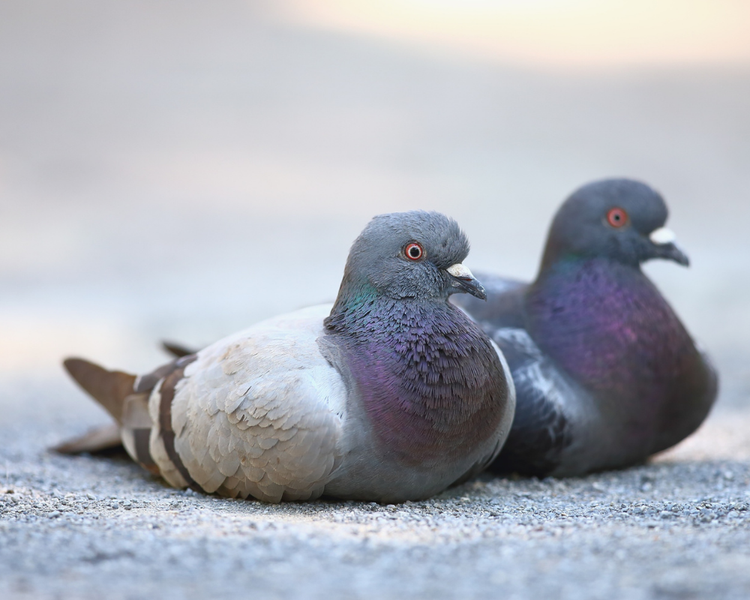
Quick answer: Spikes almost never work on a condo balcony, because pigeons do not land on your railing — they land on the floor, the AC unit, the ceiling corner and the ledge above your door, and spikes only protect the narrow strip they sit on. Exclusion netting across the open face of the balcony is the only method with a reliable success rate, and it needs your condo board’s approval before installation. Act before eggs are laid: once there is a nest with eggs, your options narrow sharply. Call Sani IQ at (705) 302-1887 for a $95 inspection, credited when you book the treatment.
If you live above the eighth floor in a GTA tower, a pigeon on your balcony is not a wildlife encounter. It is a real estate decision the bird has already made. Pigeons are cliff-nesting birds by evolution, and a concrete balcony with a sheltered corner is a better cliff than anything in nature: no predators, no weather on three sides, and a reliable human food supply within a few hundred metres.
The reason this escalates so fast is the breeding cycle. A pigeon pair can produce broods repeatedly through the year, incubation is short, and the young leave the nest in roughly a month. A balcony that has “a pigeon on it” in September can have a resident family, an accumulated droppings layer and a permanent roost by the new year. The window where this is easy to solve is measured in weeks.
Why spikes fail on balconies (and where they do work)
Spike strips are the default recommendation because they are cheap and available in every hardware store. On a commercial building’s parapet or a narrow window ledge, they genuinely work — there is nowhere else to land.
A balcony is the opposite situation. The railing is one of a dozen available surfaces. Spike the railing and the birds move to the floor, the top of the air conditioner, the horizontal channel under the ceiling slab, the light fixture, or the ledge over the sliding door. Worse, poorly installed spikes collect windblown debris and nesting material, and homeowners across Toronto regularly find a nest built on top of a spike strip, using the spikes as the frame. You have paid for a roost.
Plastic owls and reflective tape work for about four days, which is how long it takes a pigeon to learn the owl has not moved.
What actually works: netting the open face
Exclusion netting stretched across the open face of the balcony — from railing to ceiling slab, edge to edge — is the method with a success rate that holds. It does not deter birds; it makes the space physically unavailable, which is a different and much more durable thing. Installed properly with a tensioned perimeter cable, modern UV-stable netting is close to invisible from the street, does not block your view in any meaningful way, and lasts years.
The catch is that on a condo balcony, the exterior face of the building is almost always a common element, not your unit. That means installation is a condo-board question before it is a pest-control question.
The condo reality: who is actually responsible
This is where most GTA balcony pigeon problems stall for a season or two.
In a typical Ontario condominium, the owner is responsible for the unit’s interior and for keeping their exclusive-use area clean. The building envelope — slab, railing, exterior face — is usually a common element under the corporation’s control, so anything bolted, drilled or tensioned into those surfaces needs the board’s or property manager’s sign-off. Many corporations already have a standard specification for permitted netting.
Practically: check your declaration before you buy anything, because an unapproved installation can be ordered removed at your cost. And if more than one unit on your stack has birds — it usually does — a building-wide program is cheaper per unit and far more effective than one owner netting one balcony while the birds relocate two floors up.
If you manage a building, a hotel, or a multi-unit property anywhere in Toronto, Etobicoke or Mississauga, our commercial pest management program handles bird exclusion as a scoped, documented project rather than a series of one-off unit calls. For a single owner-occupied unit, our residential pest control service is the right entry point.
Timing: act before there are eggs
This matters more than the method you choose. An empty balcony can be netted tomorrow. A balcony with a completed nest and eggs means a delay of weeks while the cycle completes — pigeons are not a protected native species the way chimney swifts or bats are, but responsible operators still time the work around the nesting cycle rather than destroying active nests, and many condo corporations require it in writing.
The signals that you are early — and should act now — are: birds perching and leaving, a few droppings in one corner, and twigs appearing but no formed nest. The signals that you are late are a bowl-shaped nest of twigs and droppings, a bird that sits tight when you open the door, and two off-white eggs.
Droppings: clean them up properly, don’t panic about them
Accumulated pigeon droppings are a genuine hygiene problem and should be handled correctly, without anyone needing to be alarmed.
Dried droppings become airborne dust when swept or pressure-washed dry, and that dust is the part worth avoiding. The correct method is to wet the area first with a disinfectant solution, let it soak, then remove it wet — never dry-sweep and never dry-blast. Wear disposable gloves and an N95-type respirator, bag the waste, and wash the surface afterward. The Public Health Agency of Canada publishes general guidance on handling bird and animal droppings safely. If the accumulation is more than a light scatter — a compacted layer, or a nest site used for more than one season — have it done professionally, because the cleanup is the part homeowners most often get wrong.
Droppings also do real damage to the building: they are acidic enough to etch aluminum railings, stain concrete permanently and degrade sealant.
Deterrent comparison — honest verdicts
Exclusion netting. Highly effective and long-lasting. Requires board approval and professional installation to look right and stay tensioned. This is the recommendation for any balcony with a repeat problem.
Spike strips. Effective on narrow ledges and parapets. Largely ineffective as a standalone balcony solution, and can become nest framing. Useful as a supplement to netting on a specific ledge, not as the primary method.
Post-and-wire systems. Good on railings and ledges where netting is not permitted. Low visual impact. Does nothing for the floor or ceiling surfaces.
Bird gel and sticky repellents. Not recommended on residential balconies. Weather degradation, residue, and non-target species risk.
Visual scares — owls, kites, reflective tape, holographic discs. Days of effect, then habituation. Fine as a two-week stopgap while you arrange a real fix. Not a solution.
Ultrasonic devices. No reliable evidence of effect on pigeons. Skip them.
Removing the food source. Not a deterrent by itself, but it changes the pressure on your whole building. If a neighbour is feeding birds — and in most towers, someone is — nothing you install on your own balcony fixes the colony. That is a board conversation.
The plan is the point, not the visit
A one-time cleanup and installation deals with the balcony you have today. It does not deal with the fact that a building with one attractive balcony has forty, and that pigeons are persistent, social and long-lived.
Year-round protection is the path we recommend for anyone who has had birds once. It means the exclusion work is inspected on a schedule, tension and mesh integrity are checked before failure rather than after, and the surrounding pest pressure that birds bring with them — bird mites, beetles and flies that live in accumulated nesting material — is monitored rather than discovered. That last point is the one most owners do not see coming: the nest is rarely the only thing living in the nest.
Sani IQ protection plans start at Insect Control $845 per year and Complete Mice Protection $895 per year, with Essentials at $1,195, VIP from $1,395 and ELITE from $2,795 for properties needing the full program. Every service begins with a $95 professional inspection, credited in full when you book the treatment. There is no initiation fee, no setup fee and no monthly billing.
Not sure which tier fits a condo unit versus a whole building? Take the free quote quiz — it takes about a minute — or call (705) 302-1887 and we will scope it properly.
Sani IQ is BBB Accredited with a 5.0 rating across 126 Google reviews, carries $5M liability coverage, is licensed under the Ontario Pesticides Act and registered with the Ministry of the Environment, Conservation and Parks. Technicians are employed, licensed and background-checked — never subcontractors. Where products are used, they are reduced-risk and applied at the minimum effective rate.
Frequently asked questions
Can my condo board stop me from installing bird netting? Generally yes, if the installation touches a common element — which balcony netting almost always does. Most Ontario condo declarations give the corporation control over the building’s exterior appearance and structure. The practical move is to ask the property manager for the building’s specification before you buy anything. Many buildings already have one because you are not the first owner to ask.
Will pigeons come back after the nest is removed? Yes, unless the space is made unavailable. Pigeons show strong site fidelity and will return to a proven nesting location repeatedly, sometimes for years. Removing a nest without exclusion buys you a few weeks.
Is it safe to clean pigeon droppings myself? A light scatter, yes — wet it down first with a disinfectant, remove it wet, wear gloves and an N95-type mask, and bag the waste. Never dry-sweep or dry-pressure-wash. A compacted accumulation or an established nest site should be handled professionally.
Why do the spikes I installed have a nest on top of them? Because spikes prevent landing on a flat surface, not nesting in a structure. Debris collects between the spikes, the birds add to it, and within a season the spikes are the frame. This is common enough that it is one of the main reasons we recommend netting on balconies.
How long does bird netting last on a Toronto balcony? A properly tensioned UV-stable net typically lasts several years through Ontario’s freeze-thaw cycle. Failures are almost always installation failures — loose perimeter cable, unsealed corners, a gap at the slab — not material failures. That is the argument for having it inspected rather than installed and forgotten.
Are pigeons protected in Ontario? Rock pigeons are non-native and do not carry the protection that native migratory birds such as chimney swifts do. Active nests with eggs or young are still handled on the bird’s timeline by any responsible operator.
For identification, habits and seasonal behaviour, see the pigeon page in the Sani IQ pest library.
⚡ NO PHONE CALL NEEDED
Know your exact price in 60 seconds3 quick questions — matched to the right treatment with real, published pricing. Instantly.
Take the Quiz📖 FREE EXPERT RESOURCE
Identify any Ontario pest69 free identification guides — photos, habits, risks and prevention. No sales pitch, just answers.
Browse the Pest Library🛟 HELP CENTRE
Before & after your visitPrep checklists, what to expect and aftercare — written by our technicians so your treatment works the first time.
Visit the Help CentreFix it today. Keep it fixed all year.
Sani IQ Protect: from $77/month, with FREE rodent prevention. Smarter Protection.
Quarterly service handles ants, spiders and wasps before summer and keeps mice out before the first frost, with free re-service if anything returns between visits and a photo report every time. Mice already inside? Protect Plus removes them and keeps them out.