
Do Mothballs Keep Mice Away? (No — And In Canada It's Off-Label Use of a Pesticide)
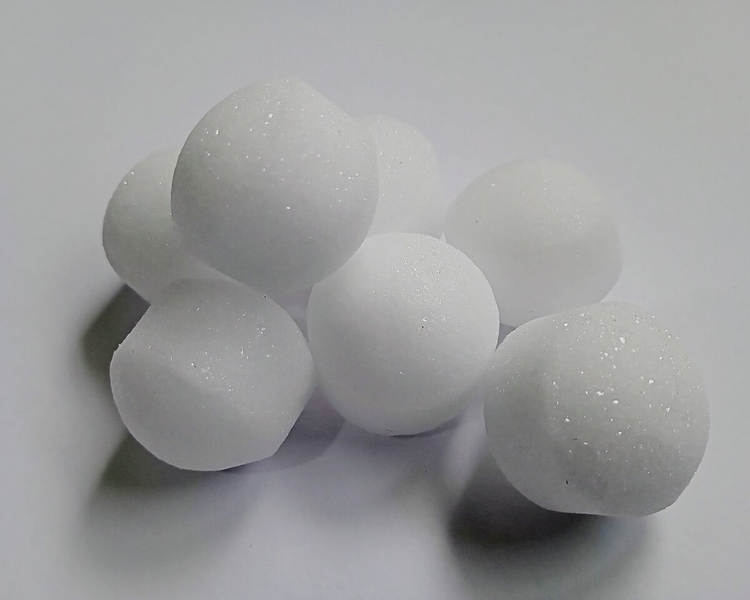
Quick answer: No. Mothballs do not keep mice away. The active ingredient only reaches a meaningful concentration inside a sealed container — scattered in an attic, crawlspace or under a sink it evaporates into open air long before it bothers a mouse, and mice habituate to odours within days anyway. There’s a second problem: mothballs are a registered pesticide in Canada, and the label doesn’t list rodents. Using them against mice is off-label use, which the Pest Control Products Act prohibits. What actually keeps mice out is sealing entry points and removing what’s drawing them in — starting with a $95 inspection, credited when you book the treatment.
It’s September, which in Ontario means mice are house-hunting. Between now and mid-November, mouse populations that spent the summer outdoors start testing foundations for a warm place to overwinter — and every year a lot of homeowners reach for the same box of mothballs in the garage.
We get why. It’s cheap, it’s already in the house, and the smell is so aggressively unpleasant that it feels like it must repel something. It doesn’t repel mice. Here’s why it fails, and what the fall spend should go toward instead.
What mothballs actually are
This is the part most people don’t know: mothballs are a pesticide, not an air freshener or a household odour product.
They’re solid blocks of either naphthalene or paradichlorobenzene that sublime — convert directly from solid to vapour — at room temperature. That vapour is the pesticide. In Canada these products are registered under the Pest Control Products Act and regulated by Health Canada’s Pest Management Regulatory Agency, and like any registered pesticide they carry a label that legally defines what you may use them for and how.
Read that label and you’ll find fabric pests: clothes moths and carpet beetles, used inside a sealed, airtight container — a garment bag, a sealed tote, a closed trunk. You will not find mice, rats, squirrels, snakes, raccoons or bats. Using a registered pesticide in a way the label doesn’t specify is off-label use, and under Canadian law that’s an offence, not a grey area. University of Florida IFAS Extension puts it plainly: applying mothballs outside their labelled use is a misuse of a pesticide.
That’s the legal side. The practical side is worse.
Why the smell doesn’t stop a mouse
The sealed-container requirement isn’t packaging advice — it’s the entire mechanism. Mothballs work by building a vapour concentration high enough to be lethal to fabric pests inside an enclosed space and holding it there for weeks.
Scatter that same handful across an attic floor, a crawlspace, or the gap behind a Whitby basement cold room, and the vapour disperses into hundreds of cubic feet of ventilated air. What reaches a mouse’s nose is a fraction of a fraction of what would be required to do anything. All you’ve produced is a smell.
And a smell is not a barrier. Consider what a mouse is weighing in October:
- A mouse needs about 3 grams of food a day and will not find it outdoors once the fields freeze.
- Your house is 20°C when it’s −10°C on the other side of the foundation wall.
- A mouse can pass through a gap about 6–7 mm wide — roughly a pencil’s diameter.
Against warmth, food and shelter for the winter, an unpleasant odour loses. Rodents also habituate quickly: an odour that produces mild avoidance on day one produces none by the end of the week, because nothing bad ever happened to the mouse when it ignored the smell. Extension research on wildlife repellents has found the same pattern across species — odour-based repellents give short-lived, inconsistent results at best.
We have walked into Oshawa basements where mothballs had been scattered along the sill plate and found fresh droppings sitting on top of them.
The part that actually causes harm
Mothballs fail at the job. That would be merely a waste of money if the product were inert. It isn’t.
Children and pets. Mothballs look like candy and like toys. Naphthalene ingestion is a genuine poisoning risk in small children, and dogs in particular will eat them. If you scatter them loose in a garage, crawlspace or under a deck, you’ve put a poisoning hazard on the floor at exactly the height of a toddler and a dog.
Indoor air. Health Canada publishes a residential indoor air quality guideline for naphthalene precisely because the vapour accumulates in living spaces. Mothballs in an attic don’t stay in the attic. Ontario homes run a strong stack effect in heating season — warm air rises and pulls replacement air up through the building envelope — so attic and crawlspace air is actively drawn into the rooms below all winter.
The smell doesn’t leave. Naphthalene absorbs into insulation, drywall and framing. We regularly meet homeowners on their second or third season of an odour they created in a single afternoon, and remediating it means pulling and replacing insulation — a real bill, generated by a product that never worked.
The same logic applies to the rest of the smell-based family: peppermint oil, dryer sheets, cayenne, ammonia dishes, ultrasonic plug-ins. They share one flaw — they ask a mouse to choose discomfort over survival, and the mouse declines.
What actually keeps mice out
Mouse control in Ontario comes down to three things, in this order.
1. Exclusion — close the building. This is the only permanent part. Every gap wider than about 6 mm is a door: utility and cable penetrations, dryer vents with failed flaps, the corners of garage door seals, gaps where the siding meets the foundation, weep holes, and the gap under a basement door. Seal with materials mice can’t chew through — copper mesh or stainless wool packed into the gap, then sealed over. Steel wool rusts; expanding foam alone is chewed through in a season.
2. Remove what’s holding them. Pet food and birdseed in original bags, garbage without a lid, a compost bin against the foundation, clutter and stored cardboard that makes ideal nesting material. Older Durham housing stock has a particular version of this — cold rooms and canning cellars with stone or block walls and a lifetime of stored boxes.
3. Reduce the population that’s already in. Snap traps placed correctly — perpendicular to the wall, trigger to the wall, in the runways where droppings concentrate — or professional bait placement in tamper-resistant stations children and pets can’t reach. Placement is most of the job; traps set in open floor space catch nothing, because that isn’t where mice travel.
If you want the biology behind that — how house mice navigate, breed and choose harbourage — our house mouse reference page has it.
What doing it properly costs
Here are our real numbers, so you can compare them against a $6 box of mothballs and a winter of scratching in the walls.
- One-Time Mice Treatment — $345. Treatment and trapping for an active problem, with a 60-day guarantee.
- Complete Mice Protection — $495. Treatment plus exclusion work on the entry points we identify.
- Every job starts with a $95 professional inspection, credited in full when you book the treatment. It isn’t a hidden fee — it’s a real diagnostic visit that comes off your bill the moment you go ahead.
There’s no initiation fee, no setup fee and no monthly billing.
The case for year-round protection
One-time service is the entry point. It solves the mice that are in your house today.
What it doesn’t solve is next October. Mice are a seasonal, recurring pressure in Ontario, not a one-off event — the population outside your foundation resets every year, and a house that was attractive last fall is attractive this fall. Sealing helps enormously, but buildings move, seals fail, and new gaps open where you can’t see them.
Our Mice Protection plan runs $895 a year. That’s continuous coverage — scheduled visits, monitoring at the entry points that matter, and a technician who catches the problem in week one instead of week five. Compare it with what a winter of unmanaged mice costs: chewed wiring, contaminated insulation that has to be replaced, damaged stored goods, and repeat one-time calls that pass the plan price by the second or third visit. Mice don’t reach a natural ceiling on their own, so the gap between a $345 problem and a five-figure one is mostly how long it ran.
If you’d rather see the numbers for your specific home before you talk to anyone, the free quote quiz takes about a minute.
We handle mice across Durham and the wider GTA, including Oshawa, Whitby and Ajax. Our technicians are employed, licensed and background-checked — never subcontractors — licensed under the Ontario Pesticides Act, registered with the MECP, BBB Accredited, carrying $5M liability, with a 5.0 rating across 126 Google reviews.
Call (705) 302-1887 and book the inspection before the first hard frost does the house-hunting for them.
Frequently asked questions
Do mothballs keep mice away? No. The vapour only reaches an effective concentration inside a sealed container; in open air it disperses to nothing. Mice also habituate to odours within days, and warmth and food outweigh a bad smell every time.
Is it illegal to use mothballs for mice in Canada? Mothballs are a pesticide registered under the Pest Control Products Act, and the label lists fabric pests in sealed containers — not rodents. Using a registered pesticide outside its labelled use is off-label use, which the Act prohibits.
Are mothballs dangerous to have around the house? They carry real risk. Naphthalene ingestion is a poisoning hazard for young children and pets, and Health Canada maintains an indoor air quality guideline for naphthalene vapour. Mothballs placed in an attic or crawlspace are drawn into living space by the stack effect during heating season.
What smell do mice hate most? None reliably enough to matter. Peppermint oil, ammonia, dryer sheets and cayenne all get recommended online and all fail for the same reason mothballs do — a mouse facing a winter outdoors tolerates a smell it doesn’t like.
How do I get rid of the mothball smell? Remove every mothball, ventilate hard, and be prepared for the odour to persist. Naphthalene absorbs into insulation and building materials; where it’s saturated the insulation usually has to come out. This is the strongest argument for never putting them in a wall or attic in the first place.
What’s the fastest way to actually get rid of mice? Trapping or professional treatment to knock the current population down, run in parallel with sealing every entry point wider than about 6 mm. Do only one and the problem comes back — trapping without sealing leaves the door open, sealing without trapping traps mice inside.
How much does mouse control cost in Ontario? A one-time mice treatment is $345, and Complete Mice Protection — treatment plus exclusion on identified entry points — is $495. Year-round Mice Protection is $895 annually. Every job starts with a $95 inspection that’s credited when you book the treatment.
⚡ NO PHONE CALL NEEDED
Know your exact price in 60 seconds3 quick questions — matched to the right treatment with real, published pricing. Instantly.
Take the Quiz📖 FREE EXPERT RESOURCE
Identify any Ontario pest69 free identification guides — photos, habits, risks and prevention. No sales pitch, just answers.
Browse the Pest Library🛟 HELP CENTRE
Before & after your visitPrep checklists, what to expect and aftercare — written by our technicians so your treatment works the first time.
Visit the Help CentreFix it today. Keep it fixed all year.
Protection plans from $845/yr — no contracts, no monthly billing
Four seasonal visits handle ants and wasps before summer and mice before the first frost, with free re-treatment if anything returns. Need it handled today instead? Same-day one-time service is always available.