
Do Bird Feeders Attract Mice? Feeding Birds Without Feeding Rodents in Ontario
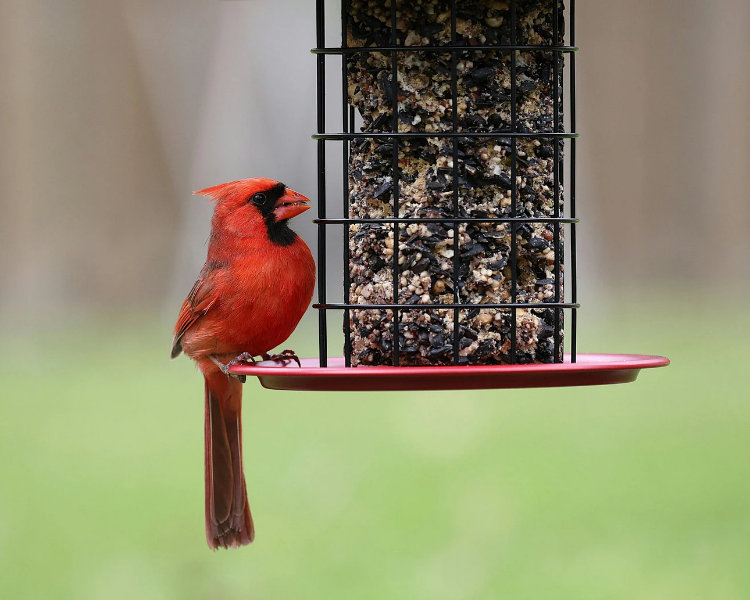
Quick answer: Bird feeders don’t create mice, but they reliably concentrate them. Spilled seed under a feeder is a high-calorie food supply that stays available all winter, a few metres from your foundation — in Barrie, Innisfil and the rural edges of Simcoe County, often all it takes to pull house mice and deer mice from the fence line to the house line. You can keep feeding birds: move the feeder well away from the building, catch and clear the spill weekly, and store seed in sealed metal. If you are already hearing activity in the walls, the feeder is no longer the first problem to solve. Call (705) 302-1887.
Why a Bird Feeder Is a Rodent Question, Not a Bird Question
Feeder season runs from late October through March — the exact window when rodent pressure around Ontario homes peaks. Mice are not migrating south. They are looking for a food source that does not disappear when the ground freezes, and a shelter that stays above freezing. A bird feeder solves the first problem. Your house solves the second.
The part homeowners usually miss is that the feeder itself is rarely the attraction. The attraction is the spill. Birds are messy eaters, and a significant share of what goes into a hanging feeder ends up on the ground beneath it — hulls, broken kernels and whole seed accumulating in the grass, the mulch bed and eventually under the snow. It is a calorie-dense pile that gets topped up every single day.
To a house mouse, that is not a bird feeder. That is a grain store with no lid.
The Distance Rule — and Why Most Feeders Break It
Standard wildlife-management advice is to keep feeders well away from the structure you are protecting — roughly ten metres or more from the foundation, further if you can. The Internet Center for Wildlife Damage Management makes the same point from the other direction: feeders concentrate wildlife, and placement decides what else shows up.
Almost nobody does this. Feeders go where people can see them — off the deck rail, by the kitchen window, hooked to the eave, hung from the shepherd’s pole beside the back step. Every one of those positions puts a permanent food source inside the short walk a mouse will happily make, and most put it directly against the part of the building where the gaps already are: the sill plate, the dryer vent, the garage door corner, the deck ledger.
A mouse foraging twelve metres out in a field is a mouse in a field. A mouse foraging two metres from your rim joist in November will find the quarter-inch opening in that rim joist before Christmas. Distance is the highest-leverage change you can make, and it costs nothing but a new hook location.
Properties on the edges of Barrie and across Innisfil — anything backing onto farmland, hydro corridor, bush lots or the shoreline strip — already sit on a seasonal rodent highway. Homeowners there often describe the same thing in late fall: no mouse activity for years, then a feeder goes up, and by December there is scratching overhead. The feeder did not import the mice. It told the local ones which house was worth the trip.
Squirrels Are the Daytime Tell
Most people never see the mice. They see the squirrels.
Squirrels and mice work the same food source on different shifts. Squirrels clear the feeder in daylight and scatter seed doing it; mice work the spill after dark. A squirrel problem at the feeder usually means a rodent problem under it that you have not caught yet.
Squirrels are also a structural warning. One that has learned your roofline as part of its feeder route is inspecting your soffit, vent screens and gable ends for a winter den — and squirrels make the openings mice then use. Our squirrel profile covers the nesting behaviour; the short version is that a chewed soffit return becomes a permanent entry point for everything smaller than the animal that made it.
Where You Store the Seed Matters as Much as Where It Falls
The second failure point is the bag.
A twenty-kilo bag of black oil sunflower in the garage, shed or unheated back porch is a bigger prize than anything on the ground, and mice will chew paper, woven plastic and thin rigid plastic to reach it. Plenty of Simcoe County mouse jobs start in a garage with a seed bag in the corner — and the garage is almost always connected to the living space by a gap you cannot see.
Store seed in a sealed metal container with a tight lid. A galvanized bin or a steel pail with a locking ring works; a plastic tote does not, long-term. Keep it off the floor and sweep the area — the handful that spills every time you fill the scoop is what keeps a population fed through February. Health Canada’s guidance on rats and mice leads with the same principle: remove the food and the shelter before reaching for anything else.
The Weekly Routine That Actually Works
None of this requires giving up feeding birds. It requires treating the feeder as a managed site instead of a decoration.
- Move it. As far from the house as your sightlines allow. Ten metres is the working target; further is better.
- Catch the spill. A seed tray under the feeder captures most of what the birds drop and turns daily cleanup into a weekly one.
- Clear the ground weekly. Rake the drop zone before snow buries it. Once there is a crust of snow over a winter’s worth of hulls, you have built a sheltered feeding chamber.
- Use less waste-prone seed. Hulled sunflower hearts, nyjer in a proper finch feeder and suet cages produce far less ground litter than mixed seed with filler.
- Take it down at night if pressure is already high. Mice feed after dark; an empty feeder from dusk to dawn removes the night shift entirely.
- Seal the storage. Metal, lid, swept floor.
- Keep the drop zone clear of cover. Tall grass, leaf piles, stacked firewood or a brush pile within a few metres gives rodents a protected approach. Open ground is a deterrent by itself.
Do all seven and the feeder stops being a liability. Skip placement and storage and the rest will not save you.
When Feeder Activity Means They’re Already Inside
There is a line where this stops being a yard-management conversation. If you are seeing any of the following, the mice are no longer commuting:
- Droppings inside — under the sink, along baseboards, in the back of a pantry, in the garage along the wall line.
- Scratching or scurrying in walls or ceilings after dark, especially between 9 p.m. and 2 a.m.
- A sharp ammonia-like smell in a closet, cold-air return or under-stair space.
- Chewed packaging, shredded insulation, or nesting material in a drawer or appliance housing.
- A dog or cat fixated on one section of wall or the base of the stove.
At that point, moving the feeder changes nothing about the population already in the structure. What changes it is finding the entry points and closing them. Our house mouse profile explains why that threshold is so low: an adult house mouse passes through an opening about the width of a pencil, and most Ontario homes have several.
A proper inspection maps those openings — rim joist, utility penetrations, garage door seals, soffit returns, weep holes, foundation cracks — rather than guessing. That is what our residential pest control work is built around, and why the mice control service in Barrie starts with the structure, not the trap count.
Why a One-Time Treatment Isn’t the Answer Here
A one-time mouse treatment clears the animals in the building right now. That is real and worth doing. But the conditions that brought them in — a food source in the yard, a cold season that runs five months, and a building with openings — are all still there the day after the technician leaves. A single treatment against a five-month pressure cycle is a bet that the next mouse does not find the same gap.
The year-round protection plan exists for that gap. Treat the one-time service as the entry point, and the annual plan as what keeps it from recurring: visits timed to the seasonal pressure, exclusion work on the entry points, monitoring that catches a new breach before it becomes a nest, and a response when something changes mid-winter.
Set against what one established infestation costs — chewed wiring, contaminated insulation, droppings through stored goods, and the cleanup after — a year of protection is the cheaper side of the ledger in most cases. Compare the annual options on our plans and pricing page, take the free quote quiz for a recommendation based on your property, or call (705) 302-1887.
Every service begins with a professional inspection, credited back in full when you go ahead with the treatment.
Frequently Asked Questions
Do bird feeders attract mice, or only rats? Both, and in most of Simcoe County mice are the likelier visitor. Rats concentrate in dense urban areas; house mice and deer mice are everywhere there is field edge, bush or shoreline. The mechanism is identical — ground spill, not the feeder itself.
Should I stop feeding birds completely over winter? Not necessarily. If the feeder is well away from the house, spill is caught and cleared, and seed is stored in metal, the risk is manageable. If you are already dealing with mice indoors, take the feeders down for the season while the exclusion work is done.
My feeder is on the deck. How bad is that? It is the worst common placement. A deck gives rodents overhead cover, a protected approach, and direct contact with the ledger board where it meets the house. If you only change one thing, change this one.
Are deer mice around a feeder a health concern? Deer mice are the species associated with hantavirus in Canada, and the risk comes from disturbing droppings and nesting material in enclosed spaces rather than from the animals outdoors. The Public Health Agency of Canada’s hantavirus prevention guidance covers safe cleanup. If you find droppings in a shed, crawlspace or cottage interior, do not sweep or dry-vacuum them.
What does Sani IQ actually do on a mouse inspection? We inspect the structure for entry points and evidence rather than simply placing traps — exterior perimeter, foundation line, utility penetrations, garage, attic access and interior activity areas — then give you a written finding and the options. Technicians are employed, licensed and background-checked. Sani IQ is licensed under the Ontario Pesticides Act and registered with the MECP, BBB Accredited, and carries $5M liability coverage.
⚡ NO PHONE CALL NEEDED
Know your exact price in 60 seconds3 quick questions — matched to the right treatment with real, published pricing. Instantly.
Take the Quiz📖 FREE EXPERT RESOURCE
Identify any Ontario pest69 free identification guides — photos, habits, risks and prevention. No sales pitch, just answers.
Browse the Pest Library🛟 HELP CENTRE
Before & after your visitPrep checklists, what to expect and aftercare — written by our technicians so your treatment works the first time.
Visit the Help CentreFix it today. Keep it fixed all year.
Mice? The Sani IQ Rodent Program: $445 at the first visit, then $150 a quarter, 12-month warranty. Bugs too? Protect from $249 a visit.
Every visit is billed after it's done — no monthly fees. Free re-service if anything returns between visits, a photo report every time, and the stations stay in all year on the Rodent Program.