
Diatomaceous Earth and Boric Acid: Why They Work in a Lab and Fail in Your Kitchen
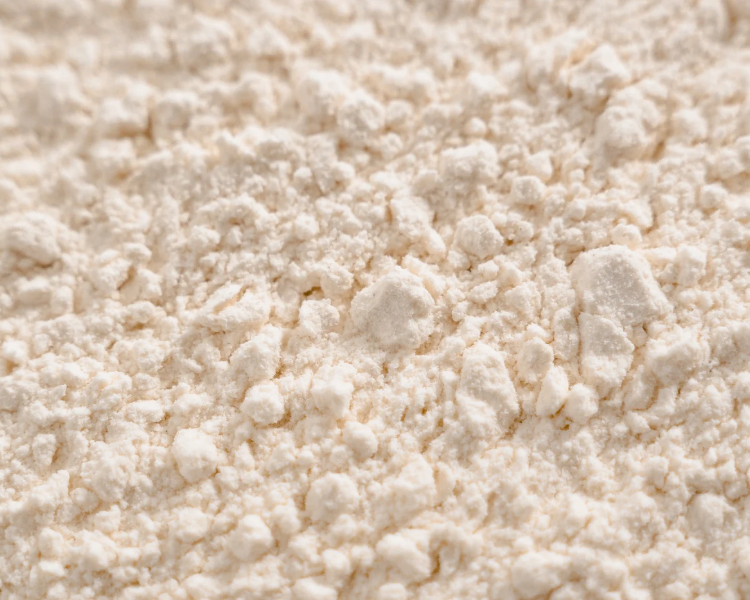
Quick answer: Diatomaceous earth and boric acid are both genuine insecticides, and both are sold as registered pest control products. Under laboratory conditions they kill reliably. In Ontario kitchens and basements they usually do not — and the reason is almost never the powder. Diatomaceous earth needs dry conditions and prolonged contact; in one university test, bed bugs that crossed a dusted strip once and walked off showed no mortality at all. Boric acid needs to be a film “barely visible to the naked eye,” because cockroaches walk around heavy deposits the way you would walk around a snowdrift. Most people apply far too much dust in exactly the places insects avoid. Applied properly, alongside bait, boric acid is a legitimately useful tool. Applied the way the internet describes it, neither product will end an infestation.
Both of these really do kill insects — which is exactly why they mislead you
There is a particular kind of frustration that brings people to our phone line in November. They have done the reading. They bought the bag of food-grade diatomaceous earth, they laid down the boric acid, they waited two weeks, and the cockroaches are still there. The natural conclusion is that the product was a scam.
It was not. That is the uncomfortable part. Both of these powders are real insecticides with decades of research behind them, and both will kill the insect they touch under the right conditions. Which means the failure happened somewhere between the tin and the floor — in the thickness of the layer, the humidity of the room, the choice of surface, or the patience of the person applying it.
The usual advice tells you to throw the product out and buy a different one. The research says something more useful: the tool was fine, the hand was wrong. Understand the few conditions these dusts depend on and you will know, within a minute of looking at your own kitchen, whether what you laid down ever had a chance. Our residential pest control work turns up the same three application errors in home after home, from downtown condos to the postwar bungalows and newer subdivisions around Markham, where kitchen renovations leave exactly the voids these insects prefer.
What diatomaceous earth actually does to an insect
Diatomaceous earth is the fossilised remains of diatoms — microscopic algae with silica shells — ground into a powder that is sharp at a scale insects cannot ignore.
According to the National Pesticide Information Center’s fact sheet, it works by “absorbing the oils and fats from the cuticle of the insect’s exoskeleton,” causing the insect to dry out and die, with the abrasive edges speeding the process up. That waxy outer layer is what stops an insect losing water to the air. Scratch it and the insect dehydrates from the inside.
Two things follow from that mechanism, and both are frequently left out of the online guides.
First, it is slow. This is not a knockdown product. In controlled laboratory exposure, more than ninety per cent of bed bugs died within four days and all were dead after ten — and that is the fast version, under continuous contact, in a dish. Nobody who sprinkles powder on a Monday should expect a result by Wednesday.
Second, it only works while it is dry. The fact sheet is blunt: it “remains effective as long as it is kept dry and undisturbed.” Laboratory work cited by University of Kentucky entomologists has shown it performs less well against bed bugs and other pests at higher humidity. A damp basement corner, a spot near a dishwasher, under a sink, along a laundry wall — these are the places people dust first and the places the product works least.
Why the same dust fails on a kitchen floor
Here is the finding that should change how you think about this. University of Kentucky researchers tested a single brief contact: a bed bug crossing a one-inch strip of dusted paper and then moving on to a clean surface. The result was no mortality. None.
Prolonged contact kills. A quick walk across does not. And a quick walk across is exactly what happens when powder goes down on an open floor or an exposed baseboard — because insects do not linger in open space. They cross it and get back under something.
The same researchers ran a field trial in six infested apartments, applying diatomaceous earth and nothing else. The average population change was a one per cent increase. Five of the six trials were ended early for inadequate control. Their conclusion was that it is not suited as a stand-alone bed bug treatment, and they noted the habit at the root of it: people sprinkle it along baseboards and carpet edges, precisely the exposed places the insects are least likely to be.
So the product is not a fraud. It is a slow desiccant needing dry conditions and sustained contact, deployed by people in damp, open, high-traffic places for a day or two. That is three strikes before the powder has a chance.
Boric acid: the stronger dust, and the snowdrift problem
Among dusts for cockroaches, boric acid is the better performer — University of Kentucky’s extension guidance says plainly that it tends to be more effective than diatomaceous earth.
It kills differently. Cockroaches pick the powder up on their bodies crossing a treated surface and then swallow it while grooming, cleaning it from their legs and antennae. Rutgers Cooperative Extension describes it as still effective for cockroach control but slower than bait, and best used in combination with bait rather than instead of it. Kept dry, its potency lasts almost indefinitely; Rutgers notes it slowly loses effectiveness once exposed to environmental moisture, so a deposit laid in a humid spot may need redoing within a month or two.
Now the single most important sentence in any of this, and the one almost nobody follows. From the University of Kentucky’s cockroach guidance: the dust “should be applied as a fine deposit barely visible to the naked eye.” Why? Because “cockroaches tend to avoid heavy accumulations of the powder, much as we would avoid walking through a snowdrift.”
Read that again, then picture the white line of powder along the back of a kitchen cabinet. That is not a treatment. That is a wall the cockroach walks around. The person who laid it down has not dosed the insects; they have politely rerouted them.
A barely visible film is hard to achieve by shaking a container. It is what a bulb or bellows hand duster is for, which is also why a technician’s application looks like almost nothing happened.
Where dust belongs, and where it is simply wasted
Placement is the other half. German cockroaches spend very little time in the open — Rutgers puts an active population at roughly eighty per cent nymphs and twenty per cent adults, mostly hidden in cracks and crevices, and notes that when numbers are low they are often hard to find by eye at all. The ones you see are the overflow.
The places that matter are the ones you have to open something to reach: crevices along cabinet edges and corners, the wall-and-floor junction behind the refrigerator, stove and dishwasher, and the openings where plumbing enters the wall under sinks. The void beneath kitchen and bathroom cabinets can often be reached by puffing a small amount through existing gaps at the top of the kick panel. Our German cockroach identification guide covers what the insect and its egg cases look like if you are not certain what you are dealing with.
And the places dust should never go: never onto countertops or other exposed surfaces, particularly any used to prepare food — wipe traces off with a damp cloth. Not into electronics, where the powder can damage components. Rutgers adds the rule that governs an occupied home: apply it thoroughly only in areas not accessible to children or pets, such as behind and under appliances and inside wall cracks.
What these dusts will not do at all
A few adjacent claims deserve the same scrutiny, because people usually buy them in the same shopping trip. Essential-oil and “all natural” sprays are, in Rutgers’ assessment, typically only effective when applied directly onto the insect, with little to no residual effect. Electronic and plug-in repelling devices have no scientific evidence behind the manufacturers’ claims. And total-release foggers are not recommended for cockroaches: very little insecticide reaches the cracks and voids where the insects are, and the ingredients tend to be repellent, scattering them deeper into the walls.
There is a pattern there. Every one of those products acts on open space, and the insect problem is not in open space.
Using them safely in an occupied home
Diatomaceous earth is low in toxicity, but it is an irritant. The NPIC fact sheet records that inhaling it can irritate the nose and nasal passages, that it can irritate the eyes through sheer abrasiveness, and that it causes skin irritation and dryness. Most of what is sold is amorphous silica, though products may contain very low levels of crystalline silica, which carries more serious respiratory concerns at occupational exposures. Practically: do not create a dust cloud in a room you are about to sit in, keep it off bedding and food surfaces, and keep pets out while you work. Boric acid is less toxic to mammals than most synthetic insecticides, which is part of its appeal — but “less toxic” is not “harmless,” and the placement rule above exists for a reason.
Whatever you use, the product label is the instruction that counts. In Canada, products sold to control pests are registered federally under the Pest Control Products Act, and the directions on that label are the legal terms of use. Do not take a re-entry time, a quantity or a dry time from any article, including this one. Take it from the label on the container you bought.
What actually ends an infestation
Both extension sources land in the same place: bait first. Gel bait placed as many small dots rather than a few large ones does the work that dust alone will not, with cockroaches dying within one to three days and a substantial reduction showing within a few weeks. Rutgers recommends repeating every two to four weeks until none are found over a four-week period. Boric acid earns its place beside that, in the voids, as a fine film — not as the plan.
Which is also why a single visit is not a treatment. Rutgers names the two commonest homeowner mistakes directly: relying on sprays as the primary method, and stopping treatment without realising small numbers are still present. A German cockroach female can produce several egg cases holding hundreds of eggs, and a single mated female can account for thousands of cockroaches inside a year. The eggs already laid when you treat are not affected by what killed the adults. That is why the second visit is not a courtesy call — it is timed to the generation you could not reach the first time.
That timing is built into how we work. Our technicians are employed, licensed and background-checked, working under the Ontario Pesticides Act with the company registered with the Ministry of the Environment, Conservation and Parks, and we place reduced-risk products where insects harbour rather than where they are visible. The year-round program treats on day one, verifies at about three weeks, seals every entry point, carries a twelve-month warranty, has no monthly fees and is billed after each visit. A one-time service is the entry point; the program is what keeps the problem from coming back. An inspection is credited in full when you book the treatment.
To find out which your situation calls for, take the free quote quiz — a few questions about what you are seeing and where. Pricing for both paths is on our plans and pricing page, or call (705) 302-1887.
Frequently asked questions
Does diatomaceous earth expire or stop working? It does not expire in the way a chemical does, but it stops working when it gets damp or disturbed. It remains effective only while it is kept dry and undisturbed, so a deposit in a humid basement or near a sink may be doing nothing long before the bag runs out.
How long does boric acid take to kill cockroaches? Slower than bait. Rutgers describes its effect as slower than baiting, and the cockroach has to pick the dust up and then ingest it while grooming, so nothing happens on contact alone. Neither extension source publishes a specific kill time, which is itself a reason not to judge the application after a few days.
I put down a thick line of powder and nothing died. Why? Almost certainly because the thickness was the problem. Cockroaches avoid heavy accumulations of powder the way a person avoids walking through a snowdrift. The deposit needs to be a fine film barely visible to the eye, which is very difficult to produce without a hand duster.
Will diatomaceous earth get rid of bed bugs? Not on its own. In a six-apartment field trial using diatomaceous earth alone, the average population actually rose slightly and five of the six trials were stopped early because the treatment was inadequate. The researchers concluded it is not suited as a stand-alone bed bug treatment.
Are these dusts safe around children and pets? Only with strict placement. The guidance is to apply thoroughly only where children and pets cannot reach — behind and under appliances, inside wall cracks and voids — never on countertops or exposed surfaces, and never where it can be inhaled or walked through. If you cannot place it that way in your home, it is the wrong method for your home.
Should I just use more product? No, and this is the most common instinct. More dust means a thicker deposit, which insects route around. More spray in the open scatters the population deeper into the walls. Both make the next treatment harder.
SERVICE IN YOUR AREA
Dealing with this right now? Bed bug treatment · Pest control in Markham
⚡ NO PHONE CALL NEEDED
Know your exact price in 60 seconds3 quick questions — matched to the right treatment with real, published pricing. Instantly.
Take the Quiz📖 FREE EXPERT RESOURCE
Identify any Ontario pest69 free identification guides — photos, habits, risks and prevention. No sales pitch, just answers.
Browse the Pest Library🛟 HELP CENTRE
Before & after your visitPrep checklists, what to expect and aftercare — written by our technicians so your treatment works the first time.
Visit the Help CentreFix it today. Keep it fixed all year.
Mice? The Sani IQ Rodent Program: $445 at the first visit, then $150 a quarter, 12-month warranty. Bugs too? Protect from $249 a visit.
Every visit is billed after it's done — no monthly fees. Free re-service if anything returns between visits, a photo report every time, and the stations stay in all year on the Rodent Program.