
Overview
The Norway rat (Rattus norvegicus) is Ontario’s dominant rat — the brown, heavy-bodied burrower behind the province’s rat surge, and the species Toronto homeowners are almost always dealing with. It nests below ground in burrows along foundations, under decks and sheds, and in sewers, then works its way into basements and ground floors through gaps the size of a thumb. Unlike the roof rat, it stays low: basements, cellars, crawl spaces and the bottom of the building. The regional backdrop matters — Toronto again tops Canada’s rattiest-city rankings, and research points to rat numbers climbing sharply across the GTA with warming winters. A rat is not a “city problem you tolerate”; it’s a breach. In a well-run home, the standard is zero rat activity. Our rattiest-city breakdown covers the trend in detail.
Identification
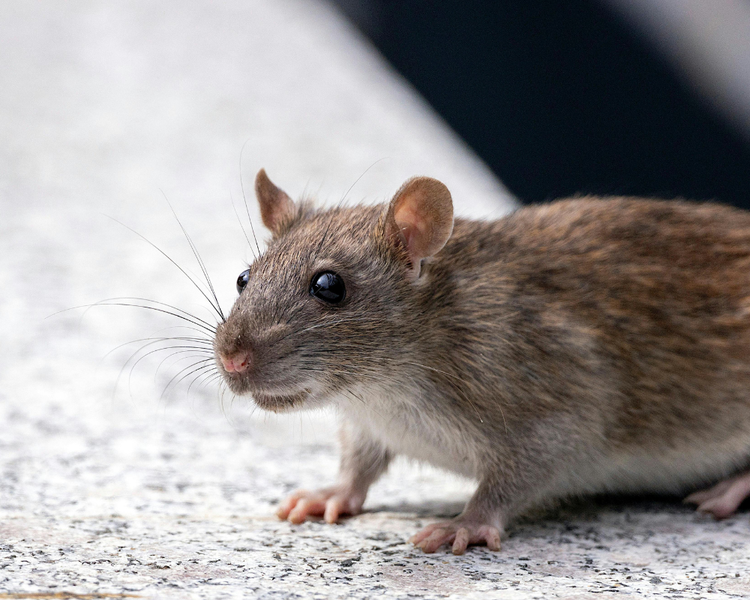
A Norway rat is unmistakably a rat: 18–25 cm in the body, thick-set and muscular, weighing 200–500 g, with coarse brown-grey fur and a pale underside. Its tail is thick, scaly and shorter than the body, its ears are small and don’t cover the eyes, and its snout is blunt. The species it’s confused with is the far rarer roof rat, which is sleeker and built to climb.
| Feature | Norway Rat | Roof Rat |
|---|---|---|
| Build | Heavy, robust | Sleek, slender |
| Tail vs. body | Shorter than body | Longer than body |
| Ears | Small, don’t cover eyes | Large, cover eyes if folded forward |
| Nesting | Burrows, basements, sewers (low) | Attics, rafters, upper storeys (high) |
| In Ontario | Dominant rat | Rare |
Against a mouse there’s no contest — a rat is several times heavier with droppings three to four times larger. Our mice vs. rats guide lays out the full comparison.
Life Cycle
Norway rats reach breeding age at about three months and reproduce quickly under good conditions — several litters a year, with roughly six to a dozen pups each, though litters vary. Colonies breed most aggressively through the warm months, which is why the summer population in a ravine or under a deck becomes the autumn invasion of the basement next door. Rats live in structured colonies with established burrow systems and travel routes, so an untreated problem tends to be a larger, more entrenched one by the time it’s noticed.
Habitat & Behaviour
Norway rats are ground dwellers and burrowers. Outdoors they dig burrow systems along foundations, under decks, sheds and slabs, near garbage and compost, and in the banks of ravines and drainage lines. Indoors they favour the low parts of a building — basements, cellars, crawl spaces and ground floors — and they’re strong swimmers that move through sewer lines. Crucially, rats are neophobic: they’re wary of new objects in their environment, so bait and traps take longer to work than they do with a curious house mouse. That caution is exactly why DIY trapping so often stalls.
Diet
Norway rats are opportunistic omnivores that scavenge grains, meat, fruit, pet food, garbage and compost. They need a reliable water source and will settle where food and water are steady — which is why open green bins, bird feeders, fallen fruit, pet food and standing water are the biggest draws to a property. Cut the food supply and a property becomes far less worth a rat’s effort.
Signs of Infestation
- Burrow holes — smooth openings roughly 5–8 cm wide along foundations, under decks and sheds, and near garbage areas. The clearest outdoor sign.
- Large droppings — 12–19 mm, blunt and capsule-shaped, often clustered along walls and travel routes.
- Greasy rub marks along baseboards, beams and pipe runs, from the oils in the rat’s fur.
- Gnaw marks — larger and rougher than a mouse’s, on wood, wiring and packaging.
- Runways — worn trails through vegetation and along walls.
- Night noises — scratching and scurrying low in walls and basements after dark.
Damage Caused
Norway rats do heavier damage than any mouse. They gnaw structural wood, wiring and even plastic water pipes — teeth that never stop growing force constant gnawing, and rodent-gnawed wiring is a documented cause of house fires of undetermined origin. Their burrowing undermines foundations, slabs, walkways and grade over time. Indoors they foul insulation, stored goods and food, and a mature colony can inflict real structural and cleanup costs before it’s fully cleared.
Health Risks
Rats are a genuine health risk, not just a nuisance. They contaminate food and surfaces with droppings and urine along every route they travel, and are linked to leptospirosis (spread through contact with rat urine), salmonellosis, and rat-bite fever, among other pathogens. For restaurants and commercial buildings, the stakes are higher still: a single rat sighting can trigger a failed inspection, a health-unit order, or a lost lease clause, which is why food businesses rely on documented monitoring and exclusion programs.
Seasonal Activity in Ontario
Norway rats are active year-round in Ontario, but the rhythm is seasonal. Summer is peak outdoor breeding — abundant food and warmth build the colony fastest — and that population build-up drives the well-known fall push indoors as temperatures drop. Warming winters compound the trend by letting more rats survive year to year, so the spring base keeps growing. Construction is a wild card in any season: when a lot is excavated, the rats living there scatter into surrounding blocks. The west-end pockets of Etobicoke and older Oshawa neighbourhoods feel this sharply. The practical takeaway: remove harbourage and seal the exterior in summer, before the autumn migration.
Where They Hide
Outdoors: burrow systems along foundations, under decks, sheds, slabs and porches, near garbage and compost, and in ravine banks and drainage lines. Indoors: basements, cellars, crawl spaces, ground-floor wall voids, behind and under appliances, and in cluttered storage low in the building.
How They Enter Homes
Norway rats exploit openings around the width of a thumb — roughly 13 mm and up. Common routes include gaps where utilities and pipes enter the foundation, worn garage-door seals, unscreened vents and floor drains, sewer and drain lines, and gaps that develop in aging foundations and rooflines. Older housing stock across the GTA offers the most of these openings, which is why older Oshawa homes and century properties see more activity.
Prevention Tips
- Seal gaps the width of a quarter or larger along the foundation, around pipe and utility entries, and under the garage door.
- Screen vents, drains and floor drains with heavy rodent-proof mesh — a priority on older homes.
- Cut the food supply — secure garbage and green-bin lids, lift bird feeders, remove pet food and fallen fruit, and eliminate standing water.
- Clear harbourage — trim ground-level vegetation and ivy off walls, and keep woodpiles and clutter away from the foundation.
- Watch for burrows — inspect the foundation, decks and garden areas for fresh 5–8 cm holes and collapse any you find.
- Mind nearby construction — if a lot is being excavated on your block, tighten your exterior before displaced rats arrive.
- Act on the first sign — droppings, gnaw marks or a musky smell mean a colony, not a stray.
DIY vs. Professional Treatment
Snap traps and store bait can catch the occasional rat, but a neophobic colony being fed from outside rarely resolves with retail products — and unless every burrow and entry point is addressed, rats keep re-entering. The lasting fix controls the exterior routes and perimeter first, then seals entry points once activity has dropped. Sani IQ treats the interior, sets commercial-grade exterior bait stations with exit routes left open by design so rats leave and die outside your walls, then returns to verify knockdown and seal the gaps — the difference between a fix that lasts and a dead-rat smell in the drywall. Every program is backed by our Pest-Free-Or-It’s-Free guarantee. Because no two rat jobs are the same, we quote after a property inspection; see the rat control cost guide for ranges and Toronto’s Rat Response Plan explained for the city context.
References
- Internet Center for Wildlife Damage Management — Norway Rats
- City of Toronto — Rodent Control
- CBC News — Toronto’s rising rat numbers and Rat Response Plan
Last updated: July 16, 2026 · Reviewed by Sani IQ licensed technicians