
Overview
The pantry moth is Ontario’s most common stored-food pest, and it’s almost always one species: the Indian meal moth (Plodia interpunctella). You meet it when a small grey-and-bronze moth flutters out of a cupboard, or when fine webbing starts knitting together your flour, rice, or dog kibble. In a well-run kitchen, a moth coming out of the pantry is never “just one moth” — it means something inside is already infested and breeding. The adults don’t feed; they exist only to mate and lay the next batch of eggs. All the damage is done by the larvae, hidden inside your food packages, which is why the problem is usually several generations deep by the time you see wings.
Identification
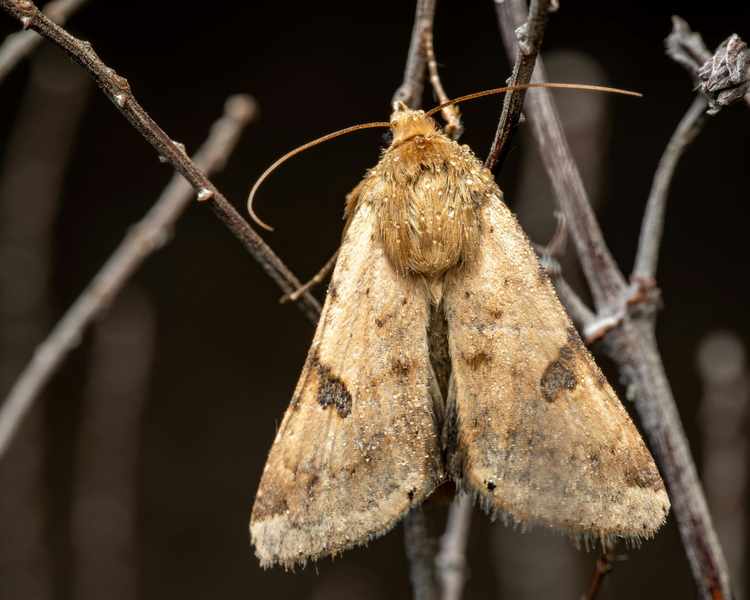
The adult Indian meal moth is small — 8 to 10 mm long with a wingspan around 16 mm — and unmistakable once you know the two-tone pattern. The front half of each forewing is pale grey to whitish; the outer half is a coppery, reddish-bronze. That bicoloured wing separates it at a glance from the plain buff-gold clothes moth, the other moth found indoors.
| Feature | Pantry Moth (Indian meal moth) | Clothes Moth |
|---|---|---|
| Where found | Kitchen, near stored food | Closets, drawers, wool storage |
| Wing colour | Two-tone: pale grey + coppery tips | Uniform buff-gold |
| Size | 8–10 mm; ~16 mm wingspan | 6–8 mm; smaller |
| Flight | Open, erratic zig-zags | Weak; runs to dark corners |
| Larvae feed on | Dry food — flour, grains, nuts | Wool, fur, silk, feathers |
The larvae are small off-white caterpillars up to about 12 mm, sometimes with a pinkish or greenish tinge, and they leave a signature: silken webbing that mats food particles together into clumps.
Life Cycle
A female lays 100 to 400 eggs directly on or near a food source. In Ontario’s warm summer kitchens the full egg-to-adult cycle can run as short as four weeks, though it stretches much longer in cooler conditions. The larval stage does all the feeding and lasts the longest; when a larva is ready to pupate it often crawls away from the food, up walls and across ceilings, to spin a cocoon in a corner or crack. This wandering is a useful clue — follow a stray caterpillar back and it frequently leads to the infested package. Because generations overlap in summer heat, a single overlooked bag of bulk flour in May can become a cupboard full of moths by late June, a pattern we cover in our summer pantry moth alert.
Habitat & Behaviour
Pantry moths live where the food is: kitchen cupboards, dry pantries, and any warm storage holding grain-based products. The larvae stay buried inside packages; the adults fly openly and are the stage you notice. They’re active day and night and drift toward lighter areas, so you’ll often spot them on the ceiling or near a window. Warmth drives everything — the warmer the pantry, the faster the cycle, which is why the problem accelerates through an Ontario summer.
Diet
Larvae feed on a wide range of stored dry goods: flour, rice, cereal, oats, cornmeal, nuts, dried fruit, chocolate, spices, birdseed, and dry pet food. Bulk-bin and loosely sealed items are the highest-risk because they’re most likely to arrive already carrying eggs. The adults do not feed at all — they have no functional interest in your food beyond laying eggs on it.
Signs of Infestation
- Webbing and clumping in flour, grains, cereal, nuts, or pet food — the single most reliable sign that larvae are actively feeding.
- Small pale caterpillars crawling on shelves, walls, or the ceiling, often heading away from the food to pupate.
- Adult moths fluttering near cupboards and ceilings, especially in the evening.
- Fine gritty frass and shed skins mixed into dry goods.
- Moths reappearing days after a clean, which means a hidden source or eggs in a crack remain.
Damage Caused
The damage is contamination rather than structure. Larvae foul dry food with silk webbing, cast skins, and frass, rendering it inedible and, in a bulk pantry, doing so across many packages at once. There’s no damage to the home itself — no chewed wood, no fabric holes — but the cost of discarding a fully infested pantry adds up, and in a commercial setting the loss of contaminated stock is compounded by inspection risk.
Health Risks
Low. Pantry moths don’t bite, sting, or transmit disease, and eating a few larvae or eggs cooked into food isn’t harmful. The concern is spoilage and, in restaurants and commercial kitchens, the health-inspection consequences of contaminated stored ingredients. For a home, it’s a nuisance and a grocery-bill problem, not a medical one.
Seasonal Activity in Ontario
Activity climbs with the heat. Ontario kitchens see the most pantry-moth pressure from June through September, when warm indoor temperatures shorten the life cycle and let generations stack up. Spring sightings are the early warning; late June is often when a small problem tips into a visible infestation. Heated homes mean low-level activity can persist into the cooler months, but the summer surge is the pattern from Mississauga to Whitby and across Oakville.
Where They Hide
Inside food packages first — the larvae live within the flour, cereal, or kibble they’re eating. Beyond the food, pupating larvae hide in shelf corners, hinge gaps, screw holes, the lips of jar lids, and cracks where a wall meets a shelf. They’ll also turn up behind and under appliances, surviving on spilled crumbs. This is why deep-cleaning the empty cupboard matters as much as discarding the infested food.
How They Enter Homes
They ride in. Eggs and tiny larvae are commonly already present in dry goods when you carry the package home from the store, and because the larvae chew through cardboard and thin plastic, an unopened box is no guarantee of safety. Bulk-bin purchases and loosely sealed packaging are the highest-risk entry route. The moth didn’t break into your sealed kitchen — it hitchhiked in on groceries, and your warm pantry did the rest.
Prevention Tips
- Store dry goods in hard airtight containers — glass or thick plastic the larvae cannot chew — rather than original packaging.
- Inspect groceries at the store and again at home, favouring sealed packaging over bulk bins for high-risk items like flour and nuts.
- Buy in amounts you’ll use within a few months so nothing sits long enough to breed a colony.
- Freeze new bulk flour, grains, or birdseed for a few days to kill any eggs before shelving.
- Wipe shelves and vacuum crevices regularly, including hinge gaps and screw holes where larvae pupate.
- Hang a pheromone trap as an early-warning monitor so you catch a problem at the first male moth.
- Clean up spills promptly and don’t let crumbs accumulate behind or under appliances.
DIY vs. Professional Treatment
A first pantry-moth problem is a reasonable do-it-yourself job, as long as you’re honest about the time: empty the cupboard completely, inspect every item for webbing or larvae, discard what’s infested and bin it outside immediately, vacuum and wash the empty space, move survivors into airtight containers, and monitor with pheromone traps for six to eight weeks. The hard part is finding the one package or egg-filled crevice you missed — miss it and the whole cycle restarts. When moths keep reappearing after a thorough clean-out, or you simply don’t want to turn the kitchen inside out, professional treatment finds the source and breaks the cycle, backed by Sani IQ’s Pest-Free-Or-It’s-Free guarantee. Treatment pricing is on the plans and pricing page.
References
- National Pesticide Information Center — Pantry Pests
- University of Kentucky Entomology — Insect Pests of Stored Grain and Grain Products
Last updated: July 16, 2026 · Reviewed by Sani IQ licensed technicians