
Spider Season Is Coming Indoors: Why Ontario Homes Fill With Spiders From Late August
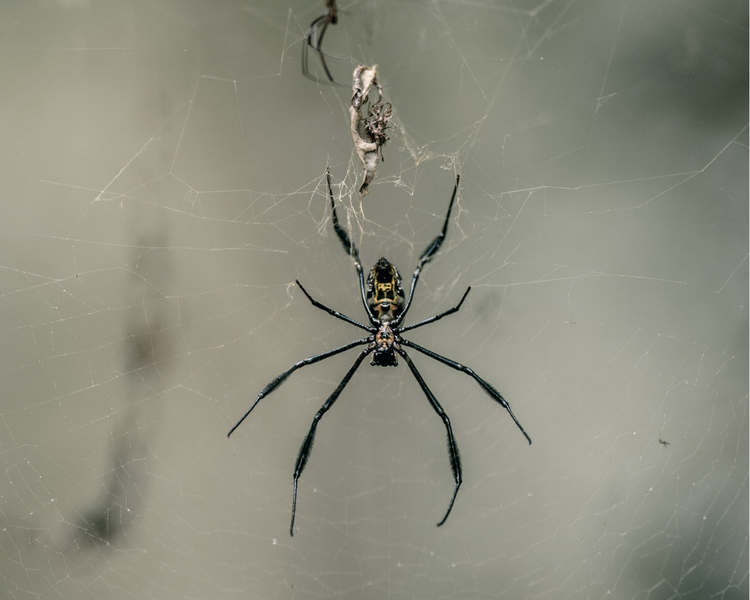
Quick answer: Spider sightings in Ontario homes spike from late August through September because mature males start wandering to find mates — not because spiders are “coming in from the cold.” The spiders you suddenly see were mostly already in or around your house. Exterior treatment and web removal before the wandering starts is what actually reduces sightings; indoor sprays after the fact barely help. Call (705) 302-1887 or use the free quote quiz.
Every year, in the last week of August, the phone starts. Nobody’s house changed. Nothing was left open. But suddenly there is a large spider crossing the living room floor at 9pm, another one in the bathtub, and webs on the porch that were not there on Friday.
This is the single most misunderstood pest pattern in Ontario, and the misunderstanding costs people money — because the reflex is to buy a can of indoor spray, which addresses almost none of what is going on.
What is actually happening in late August
Two things converge.
Males reach maturity and go looking. Most of the spiders common in Ontario homes and yards spend spring and early summer growing. By late August, males of many species hit their final moult and stop building or maintaining webs. Their entire remaining job is to find a female. So they walk — across floors, up walls, into bathtubs they cannot climb out of. That big spider sprinting across your basement is almost always a mature male on a mating run, and he has a matter of weeks to live.
This is why the sightings feel so sudden and so large. You are not seeing more spiders; you are seeing the ones that were already there, now moving in the open at night instead of sitting motionless in a web behind the deck.
Outdoor prey starts thinning. Through August, populations of the small flying insects spiders eat are still high but beginning to decline as nights cool. Spiders whose webs are near a light source — porch lights, garage lights, illuminated windows — get concentrated around the few remaining reliable food supplies, which are exactly the places humans notice them. Where you have heavy fly or midge pressure around the house, you will have heavy web pressure with it. Webs follow food, not shelter.
The “coming in from the cold” myth
The most repeated explanation is that spiders come indoors in the fall to escape the cold. It is mostly wrong, and it matters, because it points people at the wrong fix.
House spiders in Ontario are largely a distinct indoor population that lives in your basement, garage, crawlspace and wall voids year-round. They do not migrate in seasonally. Outdoor species — orb weavers on the porch, the big ones on the shed — are cold-adapted and generally do not want to be inside; they die off or overwinter as eggs regardless of your thermostat.
What genuinely does drive spiders indoors is not temperature but opportunity and food: gaps under doors, unscreened basement windows, weep holes and the space around utility penetrations, combined with an indoor insect supply. Chasing the cold theory leads people to seal nothing and spray everything. The reverse works better.
Where sightings cluster, region by region
Older GTA and Durham housing. In Ajax and across Durham, the 1960s–1980s stock has the classic combination: unsealed basement window wells, original weatherstripping at the garage-to-house door, and window wells full of leaf litter that hold moisture and insects. Basement and garage sightings dominate.
Newer subdivisions. In Markham and the newer York Region builds, the pattern is different — fewer basement spiders, more exterior webbing under soffits, around porch lights and in the gap behind vinyl shutters. New construction disturbs ground and leaves gravel and fresh landscaping that supports high insect numbers for the first several years.
Cottage country. This is where it is genuinely severe. Around Muskoka, Lake Simcoe and the Orillia lakes, docks, boathouses and lakeside decks combine standing water, huge insect hatches and unlit natural surroundings that make a lit cottage the brightest thing for a kilometre. Fishing spiders and dock spiders reach a size that unsettles even people who are relaxed about spiders — we cover them specifically in our dock spiders in Ontario cottage country guide. Late August at a cottage is peak season for both the spiders and the wasps.
Web pressure is a signal, not just an eyesore
If you walk your exterior in late August and find fresh webs re-appearing within a day or two of clearing them, that is telling you something specific: there is enough insect activity at that spot to support a spider full-time. It is the most useful diagnostic homeowners have, and it is free.
Places worth checking:
- Under soffits and eaves, especially the corners nearest exterior lights.
- Window frames and the top corners of door frames — the same air currents that carry insects carry spiders’ preferred anchoring points.
- Deck undersides and stair stringers, where it is dark, dry and sheltered.
- Around the electrical meter, hose bibs and A/C line penetrations, which are usually the least-sealed points on any house.
- Garage door tracks and the bottom corners of the door — the number one indoor-spider entry route in Ontario homes.
Heavy web pressure at those points in August predicts indoor sightings in September with uncomfortable accuracy. Clearing them properly matters — our spider web removal and prevention guide covers the technique, including why a broom often makes it worse.
Why DIY sprays fail on spiders specifically
Spiders are unusually resistant to the standard homeowner approach, for reasons of anatomy and behaviour rather than chemistry:
- They barely touch treated surfaces. A spider walks on the tips of its legs, with its body held clear of the surface. Residual products that work well on cockroaches — which drag their entire underside through the residue — transfer poorly to a spider.
- They do not groom the way insects do. Much of the dose an insect receives comes from cleaning itself afterward. Spiders do far less of this.
- Indoor spraying does nothing about the food supply. Kill the visible spiders and leave the insect population feeding them intact, and you have created a vacancy that fills within weeks.
- The wandering males you are seeing are already dying. Spraying a mature male in September is a wasted application; he had days left regardless.
What does work is unglamorous: reduce the insect supply on the exterior, treat and physically remove webbing at anchor points, seal the entry gaps, and change or reposition exterior lighting so it is not a feeding station attached to your house. That is an outside-in job, done before or during the wandering window rather than after.
What professional treatment actually involves
A meaningful spider service in Ontario is an exterior program: perimeter and entry-point treatment, mechanical web removal from soffits, eaves and door surrounds, attention to the harbourage points listed above, and — where relevant — addressing the flying-insect pressure that is feeding the population in the first place. Indoor work is limited to specific harbourage areas like unfinished basements and crawlspaces.
Our published General Insect Treatment is $475, and for what spider-specific work costs and what changes the number, see our spider control cost guide for Ontario. Year-round coverage across the plans ($845 / $1,195 / $1,395 VIP, plus a one-time $99 initiation on annual plans) is on our plans and pricing page; what a standard visit covers is on our residential pest control page.
Timing: the window is now
The practical calendar for Ontario:
- Early-to-mid August: best time to act. Males have not started wandering, webs mark where the population is, and exterior work has weeks to take effect before sightings peak.
- Late August to mid-September: peak sightings. Exterior work still helps for the rest of the season, but you will be seeing wandering males regardless while the current cohort ages out.
- October onward: outdoor populations crash on their own. Indoor basement and crawlspace populations do not — those persist all winter and are what makes next August’s numbers.
If your last two Septembers involved daily spider removal, this month is when that gets changed. Call (705) 302-1887 or start with the free quote quiz.
Frequently asked questions
Why am I suddenly seeing huge spiders in my house in late August? Mature males have stopped maintaining webs and are wandering to find mates. They are the biggest individuals of the year and they move in the open, usually at night. It is a behaviour change, not an invasion.
Are the spiders coming inside because it is getting cold? Largely no. Most spiders you see indoors in Ontario live indoors year-round, and outdoor species are cold-hardy. Entry gaps and indoor insect supply matter far more than temperature.
Are any Ontario house spiders dangerous? Ontario has no medically significant spider that is common in homes. The black widow exists in a few isolated southern locations and is rarely encountered. The realistic problem with late-summer spiders is nuisance, webbing and the occasional defensive bite that reacts locally — not danger.
Will killing spiders make things worse? Not directly, but it misses the point. Spiders are a symptom of an insect supply. Remove the spiders and leave the supply, and new spiders take the same spots within weeks.
Is it too late to do anything if I am already seeing them? No. Exterior treatment and web removal in September still reduces the population going into winter and lowers what you deal with next August — but acting in early August produces a visibly better season.
Do you treat cottages and seasonal properties? Yes, throughout Muskoka, Orillia, Lake Simcoe and Simcoe County. Docks, boathouses and lakeside decks are the priority areas and usually the difference between a usable and unusable deck in September.
Need a Pest Control Expert?
Free quotes. Same-day available. Guaranteed results.