
May 2026 Wasp Alert: Queens Are Building Nests Across the GTA Right Now
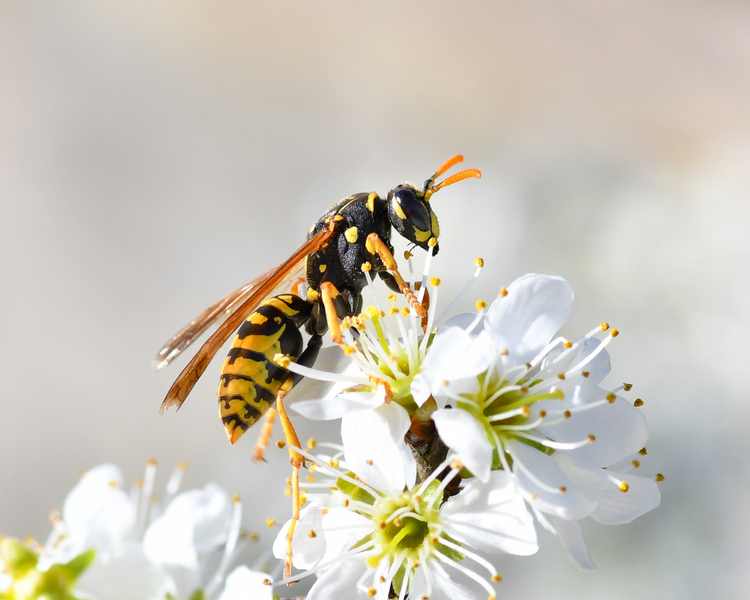
Wasp queens are out across the Greater Toronto Area this week, and the small papery ball you might be ignoring under your eaves is the foundation of a colony that will house thousands of aggressive wasps by August. As of late May 2026, our Sani IQ crews are seeing newly-established primary nests on inspections from Toronto and Etobicoke through Vaughan, Newmarket, Barrie, and into the Muskoka cottages. If you spot one now, this is the single best two-week window all year to deal with it.
What’s happening in Ontario right now
| What’s happening | What to do this week |
|---|---|
| Solitary queens are scouting and building golf-ball-size primary nests | Walk your property perimeter and inspect eaves, soffits, sheds, decks |
| Nests currently contain 1 queen + roughly 20 to 50 early workers | Do not knock down or spray — a sting at this stage is still possible |
| Colonies can grow to 3,000 – 15,000 wasps by August if left alone | Book a professional inspection while the nest is small and cheap to treat |
| Mild Ontario May = earlier queen activity than five years ago | Schedule preventative exterior service if you’ve had wasps in past summers |
The biology here is non-negotiable. A primary wasp nest in May contains one queen and a handful of workers. By early July, that same nest typically reaches 500 to 1,000 workers. By August, mature yellow jacket and bald-faced hornet colonies across the GTHA can contain 3,000 to 15,000 wasps at peak defensive capacity. The May window is the cheapest, safest, fastest moment to act.
Where Ontario wasp queens are nesting in 2026
This year’s mild April and warmer-than-average early May has pushed queen activity slightly ahead of schedule. On our recent inspections we’ve found new primary nests in all the usual spots:
- Under roof eaves and soffits — the single most common location
- Inside attic peaks and behind gable vents
- Inside garden sheds, BBQ covers, and patio umbrellas left folded
- Under deck boards and the underside of patio railings
- Inside hollow fence posts and outdoor light fixtures
- Underground (yellowjackets) — old rodent burrows in lawns and garden beds
- Inside child playhouses and rarely-opened storage bins
If you live in a wooded area — Muskoka, Innisfil, Orillia, parts of Oakville and Vaughan — also check the underside of branches at eye level and the back wall of any detached garage.
Why this week matters more than most
The “stop it in May” approach isn’t marketing — it’s wasp biology.
- One queen vs. thousands of defenders. In May, the entire colony is essentially one wasp. In August, a single disturbance can put thousands of stinging insects in the air.
- Smaller, lower nests. Primary nests are golf-ball or ping-pong size and sit at reachable heights. By mid-summer they’re hidden inside wall voids and attic peaks.
- No territorial behaviour yet. Spring queens are focused on building, not defending. Mature summer colonies are aggressive within 6 metres of the nest.
- One treatment, one visit. Early-season treatment is typically straightforward. Late-summer removals are larger jobs that often require multiple visits.
What to look for on your walk-around this weekend
Spend ten minutes walking the perimeter of your property. You’re looking for any of the following:
- Small grey or tan papery balls (golf-ball to ping-pong size) attached by a thin stalk
- A single wasp repeatedly entering and exiting the same point on your house — this is the most reliable sign of an active nest behind cladding
- Chewed-looking patches on wood fence posts, sheds, or deck rails — wasps strip wood fibre to make nest paper
- Wasps inside upper-storey rooms, especially near windows or pot lights — a strong signal of a nest in the wall void or attic
If you see any of these signs, stop. Do not knock the nest down. Do not spray drugstore products from a step ladder. Both make the problem worse.
What to do if you find a primary nest
- Mark the location and note the time of day wasp activity is highest.
- Move children and pets indoors while you observe — keep at least three metres away.
- Photograph the nest from a safe distance so we can identify the species before arrival.
- Do not spray over-the-counter products into eaves, soffits, or wall voids. It often pushes wasps deeper into the structure and turns a contained nest into a wall infestation.
- Call (416) 879-1294 or request a quote. We’ll dispatch a licensed technician for treatment using science-based, targeted products.
For homeowners with past wasp issues, we recommend booking preventative exterior service in late May or early June. It’s the most cost-effective wasp insurance you’ll buy all year.
Wasps vs. hornets — and why species matters this week
Ontario homeowners often call everything a “wasp.” For treatment purposes the species matters:
- Paper wasps — slender, dangling legs in flight, build open umbrella-shaped nests under eaves.
- Yellow jackets — shorter, stockier, bright yellow-and-black, often nest in ground burrows or wall voids. Most common sting calls in the GTA.
- Bald-faced hornets — black with white face, build large football-shaped nests in trees and on house exteriors.
- European hornets — larger, brown-and-yellow, increasingly seen in southern Ontario.
A trained eye can usually identify the species from a single photo. That’s why we ask for a photo before dispatch — it determines treatment approach and timing.
For a deeper identification guide, see our wasp and hornet nest identification guide for Ontario.
Why Sani IQ for wasp control in Ontario
Sani IQ is licensed by the Ontario Ministry of the Environment and operated by a hands-on owner with deep local pest experience and 100+ five-star reviews. We use Integrated Pest Management (IPM) principles for wasps and hornets — targeted product selection, species-appropriate treatment, and follow-up where required. We don’t upsell unnecessary repeat visits, and we don’t treat what doesn’t need treating.
We serve the entire GTA and Central Ontario, including Toronto, Etobicoke, Mississauga, Oakville, Vaughan, Hamilton, Newmarket, Bradford, Oshawa, Barrie, Innisfil, Orillia, and Muskoka.
See our residential pest control services, our commercial pest elimination services for property managers, and current plans and pricing. Local? Check our Barrie pest control page or Oakville page.
Spot a nest this weekend? Act this week
Wasp nests double in size roughly every two to three weeks through June. A nest treated in late May costs a fraction of one treated in August, and the safety difference is enormous. Call (416) 879-1294 or request a quote online — we’ll handle it before the colony grows up.
Browse more seasonal alerts on the Sani IQ blog.
Frequently asked questions
Why are wasps so active in late May in Ontario? This is queen nest-establishment season. Queens that overwintered are now scouting locations, building primary nests, and laying the first generation of workers. Their activity is highly visible because there are no defending workers yet — the queens themselves are doing all the building.
Should I knock down a small wasp nest myself? No. Even early-stage queens will sting if their nest is disturbed, and any wasp species in Ontario can sting multiple times. A licensed professional treats the nest properly so it doesn’t simply rebuild a few feet away.
Will the queen come back if I just remove the nest? Often, yes. Wasp queens are highly site-loyal — removing the physical nest without treating the queen frequently results in a new nest within metres of the original.
Do I need treatment if I’ve only seen one wasp? One wasp inside the house is rarely concerning. A wasp repeatedly entering and exiting the same exterior point is concerning — that’s an active nest signal. Take a photo and call us.
How much does early-season wasp nest removal cost in Ontario? Early-season treatment is significantly cheaper than mid-summer removal because nests are smaller and more accessible. See our plans and pricing for current rates, or call (416) 879-1294 for a free quote.
Is wasp activity worse in 2026 than in past years? Anecdotally, our team is seeing queens establishing primary nests slightly earlier than in past Mays, consistent with the mild Ontario spring. We do not have peer-reviewed 2026 data and will not claim a province-wide “surge” without it — but the early-May warmth is a known accelerator of wasp colony establishment.
Need a Pest Control Expert?
Free inspections. Same-day available. Guaranteed results.