
Web Management: The Best Ways to Clear Webs and Discourage Rebuilding

For many Ontario homeowners, spider web removal and prevention feels like a never-ending chore. You sweep a web away on Monday, and by Wednesday, a new one has appeared in the exact same corner. While spiders are technically beneficial because they eat other insects, their webs can make a clean home look neglected and trigger anxiety for those with arachnophobia.
Effective “web management” is about more than just a broom; it’s about changing the environment so spiders no longer feel welcome.
The Science Behind Spider Web Removal and Prevention
Spiders are strategic. They build webs where the “hunting” is good. If you have a lot of webs, it usually means you have a steady supply of other insects like flies, moths, or gnats. According to the Government of Canada’s pest notes, reducing the food source is the most effective way to see a long-term reduction in spider activity.
Step 1: Effective Spider Web Removal and Prevention Techniques
Before you can prevent new webs, you must clear the old ones correctly.
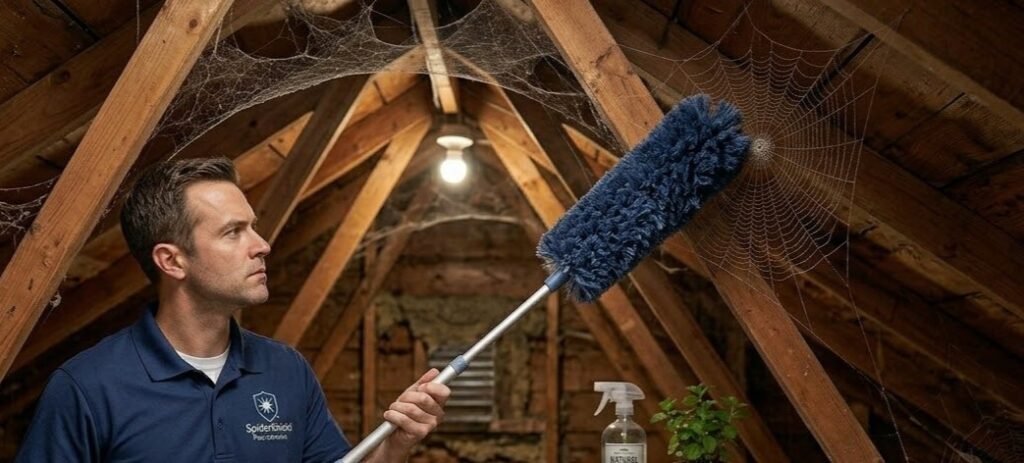
- Vacuum Over Brushing: Whenever possible, use a vacuum with a hose attachment. Brushing webs with a broom often just smears the sticky silk against the siding or ceiling, which actually attracts more dust. A vacuum sucks up the web, the egg sacs, and often the spider itself.
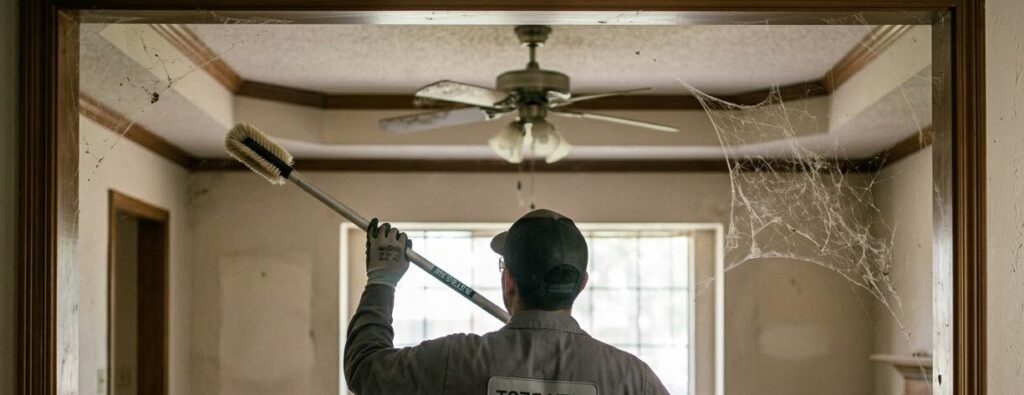
- The “Web Pole” Method: For high eaves and hard-to-reach corners, use a specialized telescopic web brush. These have stiff, domed bristles designed to grab silk without scratching your paint.
- Pressure Washing (Exterior Only): A light pressure wash can clear large areas of the exterior, but be careful not to blast water into soffit vents, which can cause moisture issues in your attic.
Step 2: Long-Term Spider Web Removal and Prevention Strategies
Once the webs are gone, you need to discourage the “architects” from coming back.
Manage Your Lighting
Insects are attracted to standard white light bulbs. Spiders, in turn, build webs right next to these bulbs to catch the “buffet.”
- Switch to Yellow LED “Bug” Bulbs: These are less visible to flying insects, which means fewer spiders will set up shop near your doors and windows.
- Motion Sensors: Keep lights off unless they are needed to reduce the time insects are drawn to your home.
Seal Entry Points
Spiders don’t need much room to get inside. As part of your spider web removal and prevention routine, inspect your window screens for tears and use caulk to seal gaps around door frames and utility lines.
Use Natural Repellents
Spiders “taste” with their feet. Certain scents are highly unpleasant to them.
- Peppermint Oil: Mix 10–15 drops of pure peppermint essential oil with water in a spray bottle and mist your window sills and door frames.
- Vinegar: A 50/50 mix of white vinegar and water can serve as a contact deterrent, though it must be reapplied frequently.
Why Professional Spider Web Removal and Prevention is Different
Sometimes, the sheer volume of spiders is too much for a DIY approach. If you are dealing with a heavy infestation of house spiders or more concerning species like Yellow Sac spiders, a professional treatment is necessary.
How Sani IQ Solves the Problem:
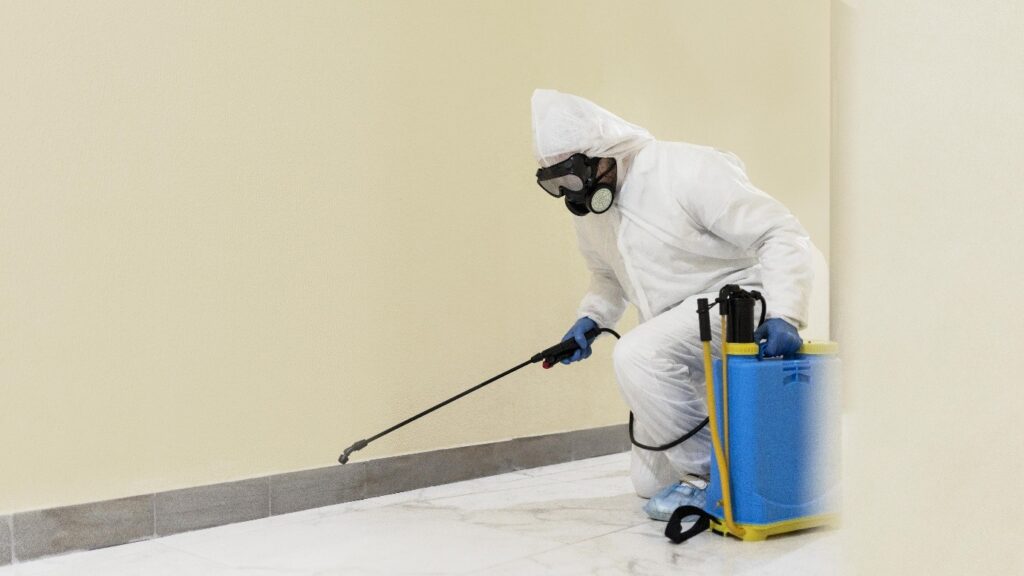
- Residual Perimeter Treatments: We apply a professional-grade barrier that discourages spiders from crawling on your siding or foundation.
- De-Webbing Service: We don’t just spray; we physically clear high-reach webs and egg sacs as part of our premium service.
- Integrated Pest Management: We identify the other pests that are attracting the spiders in the first place, solving the root cause of the problem.
Reclaim Your Porch and Ceilings
You shouldn’t have to walk through a “sticky trap” every time you leave your house. With a consistent spider web removal and prevention strategy, you can keep your home looking its best and keep the eight-legged invaders at bay.
Ready for a web-free home? Contact Sani IQ today for a professional exterior treatment and seasonal protection plan.