
The Science of Scents: How Ant Pheromone Trails Lead the Colony to Your Kitchen
If you’ve ever wondered why a single ant suddenly turns into a full-blown trail marching across your counter, the answer lies in chemistry. Ants do not rely on sight or sound the way humans do. Instead, they communicate using powerful chemical signals called pheromones.
Because of this, what starts as one scouting ant can quickly become an organized invasion. Understanding how these pheromone trails work is the key to stopping ants before they take over your kitchen.
What Are Ant Pheromone Trails?
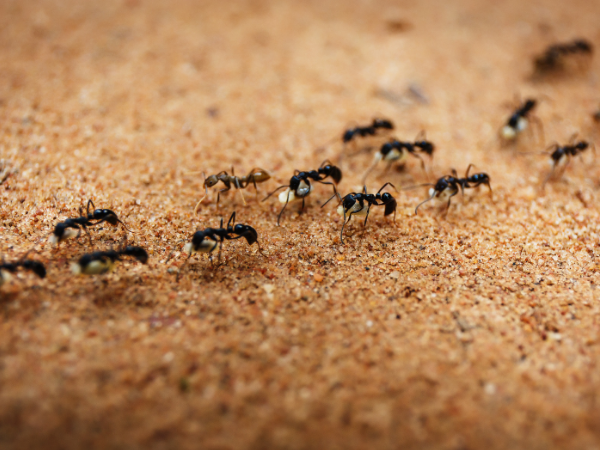
Ant pheromone trails are invisible chemical paths that ants use to communicate with one another. When a scout ant finds a food source, it releases a pheromone trail on its way back to the colony.
As a result, other ants follow this exact path to the food. Moreover, each ant that travels the trail reinforces it by adding more pheromones. Consequently, the trail becomes stronger and more attractive over time.
This is why, within hours, you may see dozens—or even hundreds—of ants following the same route into your home.
How Ants Use Pheromones to Find Your Kitchen
Ants are constantly searching for food, especially in warmer months. However, their success depends on efficiency and communication.
1. The Scout Phase
First, a single ant leaves the colony to explore. It moves randomly, searching for crumbs, spills, or accessible food sources.
2. Discovery of Food
Once food is found, the ant consumes a small amount and prepares to return to the colony.
3. Trail Creation
On its way back, the ant lays down a pheromone trail. This trail acts like a roadmap leading directly to your kitchen.
4. Reinforcement
Soon after, more ants follow the trail. Because each ant strengthens the scent, the path becomes increasingly difficult to disrupt.
Therefore, what seemed like a minor issue quickly escalates into a persistent infestation.
Why Your Kitchen Is a Prime Target
Kitchens naturally attract ants because they provide everything a colony needs to survive. In particular, ants are drawn to:
- Sugary Foods: Spilled juice, fruit, and sweets are highly attractive
- Grease and Proteins: Cooking residue, oils, and crumbs
- Moisture Sources: Sinks, leaks, and damp areas
- Accessible Entry Points: Cracks, gaps, and unsealed edges
Additionally, even the smallest food particles can sustain a large number of ants. As a result, maintaining cleanliness alone may not completely prevent infestations.
Signs of an Ant Pheromone Trail in Your Home
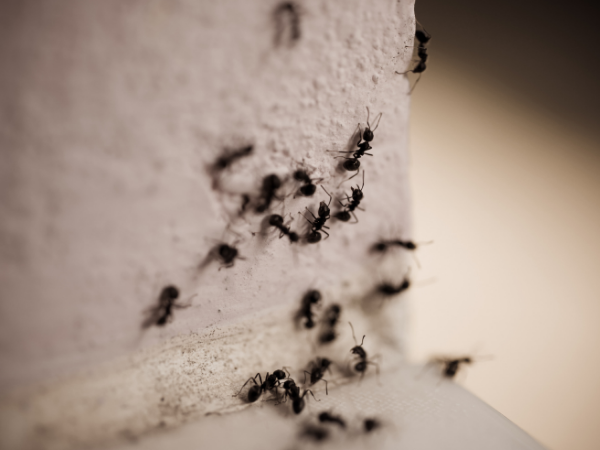
Because pheromone trails are invisible, you need to rely on behavior patterns instead.
Common Signs Include:
- A consistent line of ants moving in the same direction
- Ants entering through tiny cracks or gaps
- Increased activity near food or water sources
- Reappearing ants even after cleaning the area
If you notice these signs, it is likely that a well-established pheromone trail is already in place.
Why DIY Cleaning Often Fails
Many homeowners try to solve ant problems using basic cleaning methods. While wiping surfaces may remove visible ants, it often does not eliminate the pheromone trail.
For example, standard cleaners may not fully break down the chemical signals. Therefore, ants can still detect the path and continue returning.
Moreover, killing only the visible ants does not address the colony itself. As a result, new ants will simply follow the same trail.
How to Disrupt Ant Pheromone Trails Effectively
To stop ants successfully, you must target both the trail and the colony.
1. Break the Scent Trail
Use proper cleaning agents, such as vinegar-based solutions, to disrupt pheromone signals. This helps prevent ants from re-establishing the path.
2. Eliminate Food Sources
Store food in sealed containers and clean up spills immediately. Additionally, take out garbage regularly.
3. Seal Entry Points
Inspect your home for cracks, gaps, and openings. Then, seal them to block access.
4. Address Moisture Issues
Fix leaks and reduce humidity, since ants are attracted to water sources.
However, even with these steps, some infestations persist due to hidden nests or multiple colonies.
Why Professional Ant Control Is More Effective
While DIY methods can help temporarily, they rarely eliminate the root of the problem. Professional pest control focuses on long-term solutions rather than surface-level fixes.
At Sani IQ, our approach includes:
- Targeted Treatments: Designed to eliminate entire colonies, not just visible ants
- Advanced Detection: Identifying hidden nests and multiple entry points
- Safe Applications: Solutions that are effective yet family- and pet-conscious
- Preventive Strategies: Long-term protection to stop future infestations
As a result, you get a complete solution instead of a recurring problem.
Protect Your Kitchen from Ant Infestations
Ant infestations are not random—they are highly organized, chemical-driven invasions. However, once you understand the science behind pheromone trails, you can take the right steps to stop them.
If ants are repeatedly finding their way into your kitchen, it is time to take action. Instead of dealing with temporary fixes, invest in a solution that addresses the source.
Contact Sani IQ today for expert ant control services and keep your home clean, safe, and pest-free.