
Nest Identification: Distinguishing Between Paper Wasps, Yellow Jackets, and Hornets
Finding a swirl of activity under your eaves or a grey “basketball” hanging from a tree can be a heart-stopping moment. Consequently, before you grab a ladder, accurate wasp and hornet nest identification is critical. Knowing exactly which aerial roommates you’re dealing with helps you determine how aggressive they might be and what risks they pose to your family.
Stinging insects in Ontario vary wildly in their nesting habits and temperament. Specifically, while some species live quietly in the corners of your porch, others defend their territory at the slightest vibration.
The Paper Wasp: The “Umbrella” Minimalist
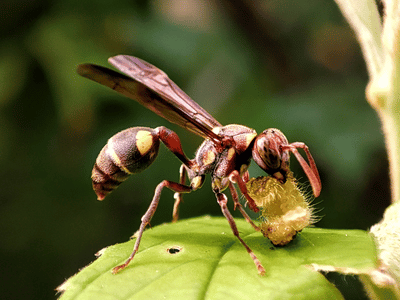
Paper Wasps are perhaps the most common stinging insects found around Ontario residential properties. They are often the easiest to identify because their nests are “open-faced.”
- Appearance: The nest resembles an upside-down umbrella or a honeycomb. Moreover, you can see the individual hexagonal cells where the wasps raise their larvae because they lack an outer covering.
- Location: Most Yellow Jacket species in Ontario nest underground in old rodent burrows. Additionally, they are notorious for nesting in “voids”—the space behind your brickwork, inside attic insulation, or within hollow porch pillars.
- Behavior: These wasps generally act less aggressively than their cousins. However, they will still sting you if you touch the nest or threaten them directly.
The Yellow Jacket: The Hidden Aggressor
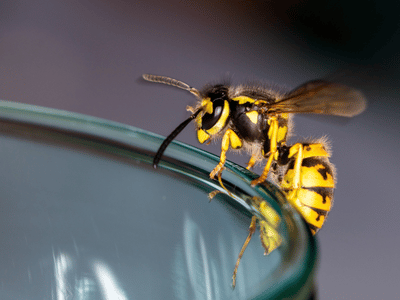
Yellow Jackets are responsible for the vast majority of “unprovoked” stings in late summer. For proper wasp and hornet nest identification, you have to look both up and down, as these pests are highly adaptable.
- Appearance: Their nests have a distinct “paper bag” look with a single entry hole at the bottom. Furthermore, a thick, grey pulpy shell encases multiple layers of internal combs.
- Location: About 80% of Yellow Jacket species in our region nest underground in old rodent burrows or hollow logs. However, they are also notorious for nesting in “voids”—the space behind your brickwork, inside attic insulation, or within hollow porch pillars.
- Behavior: Extremely aggressive and territorial. According to the University of Guelph’s Honey Bee Research Centre, for example, Yellow Jackets will swarm and attack if they feel the vibrations of a lawnmower passing near their ground nest.
The Hornet: The Aerial Architect
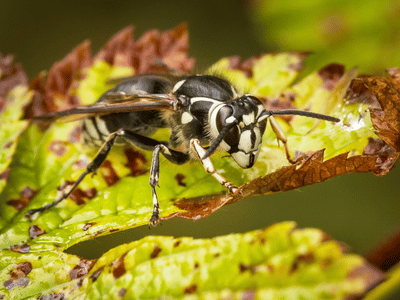
In Ontario, when people speak of hornets, they are usually referring to the Bald-Faced Hornet. These are technically a type of large yellow jacket, but their nests are unmistakable.
- Appearance: These nests are large, grey, and teardrop-shaped. They can grow to be larger than a basketball by the end of the season. The exterior is a tough, multi-layered paper made from chewed wood fibers mixed with saliva.
- Location: Almost always found high up. Look for them hanging from sturdy tree branches, thick bushes, or occasionally the high peaks of a roofline.
- Behavior: Hornets are highly territorial. Consequently, they use a “guard” system where individuals watch for threats at the entrance. They can sting multiple times and may even squirt venom if they feel cornered.
Quick Reference: Wasp and Hornet Nest Identification
| Feature | Paper Wasp | Yellow Jacket | Bald-Faced Hornet |
| Nest Shape | Open honeycomb / Umbrella | Enclosed “Paper Bag” | Large Teardrop / Basketball |
| Visibility | Cells are visible | Hidden by outer shell | Hidden by outer shell |
| Common Spot | Eaves, window frames | Underground, wall voids | High trees, roof peaks |
| Aggression | Moderate (Defensive) | High (Territorial) | Very High (Aggressive) |
The Danger of DIY Removal
Once you have performed your own wasp and hornet nest identification, the temptation is to handle it yourself. However, this is where most injuries occur.
- Incomplete Elimination: Store-bought sprays often only kill surface insects. As a result, the queen and hundreds of larvae remain safe inside to rebuild.
- Structural Damage: Spraying a nest inside a wall void (common with Yellow Jackets) can cause the insects to retreat further into your home rather than exiting outside.
- Anaphylaxis Risk: Many people remain unaware of their life-threatening allergies to stinger venom until a colony swarms them.
If you are dealing with other “hidden” home invaders that are less aggressive but equally persistent, you might also find our guide on cockroach allergens and childhood asthma helpful for maintaining a healthy home.
The Sani IQ Professional Approach
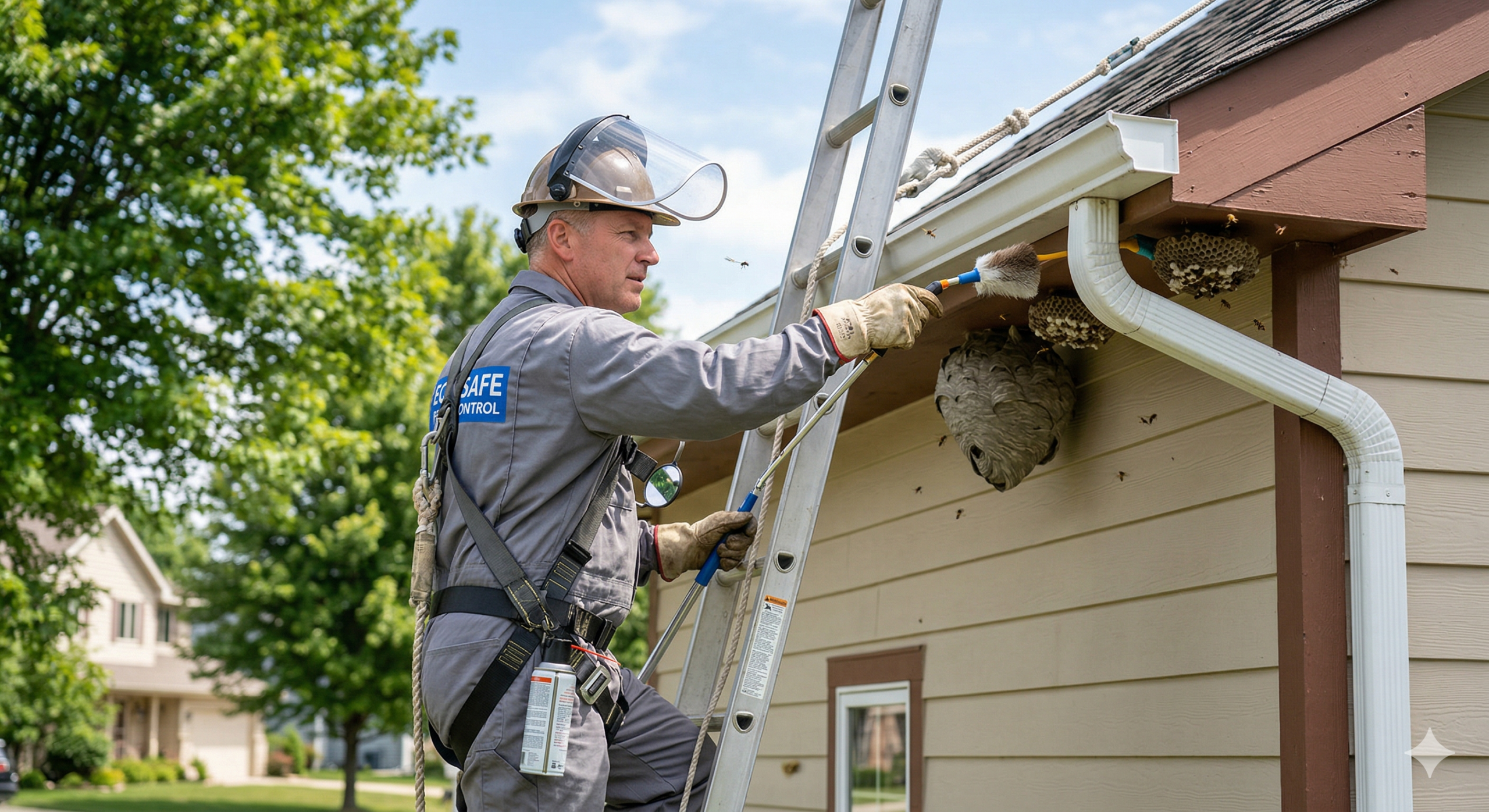
At Sani IQ, we don’t just “spray and walk away.” Our process for wasp and hornet nest identification and removal is designed for total colony elimination and long-term prevention.
- Species Verification: We confirm the species to determine the safest entry and treatment point.
- Specialized Equipment: Our technicians use professional-grade protective suits and high-reach poles to treat nests safely from the ground.
- Residual Barriers: We apply treatments that prevent “scout” wasps from rebuilding in the same location next season.
- Physical Removal: Finally, we physically remove the nest structures whenever possible to prevent secondary pest infestations.
Don’t take a gamble with stinging pests. Contact Sani IQ today for expert wasp and hornet nest identification and guaranteed removal.